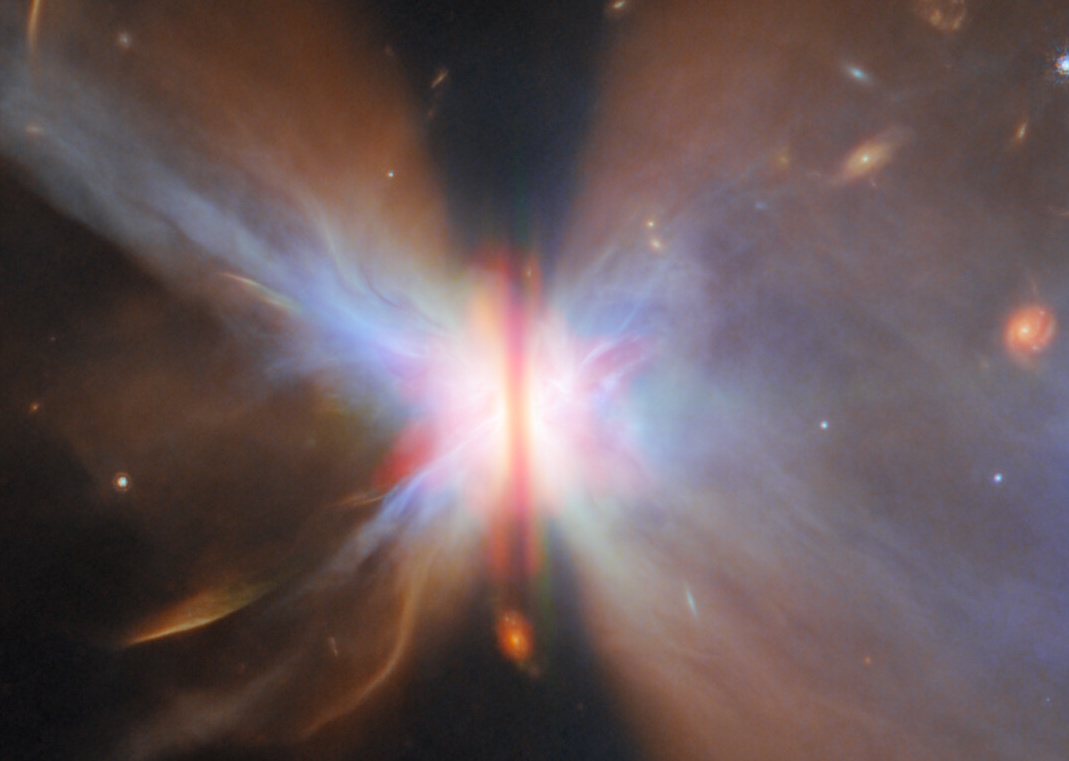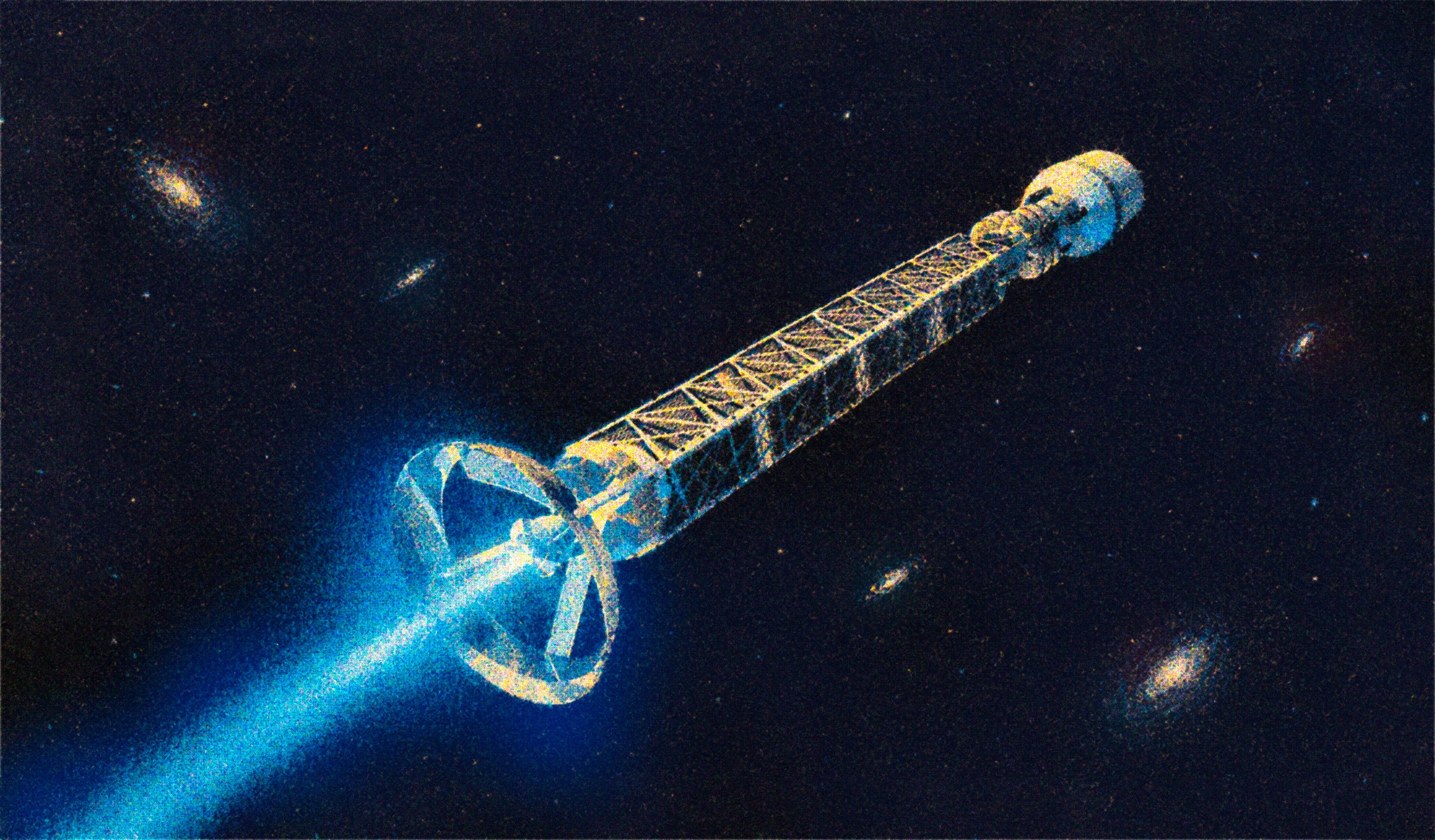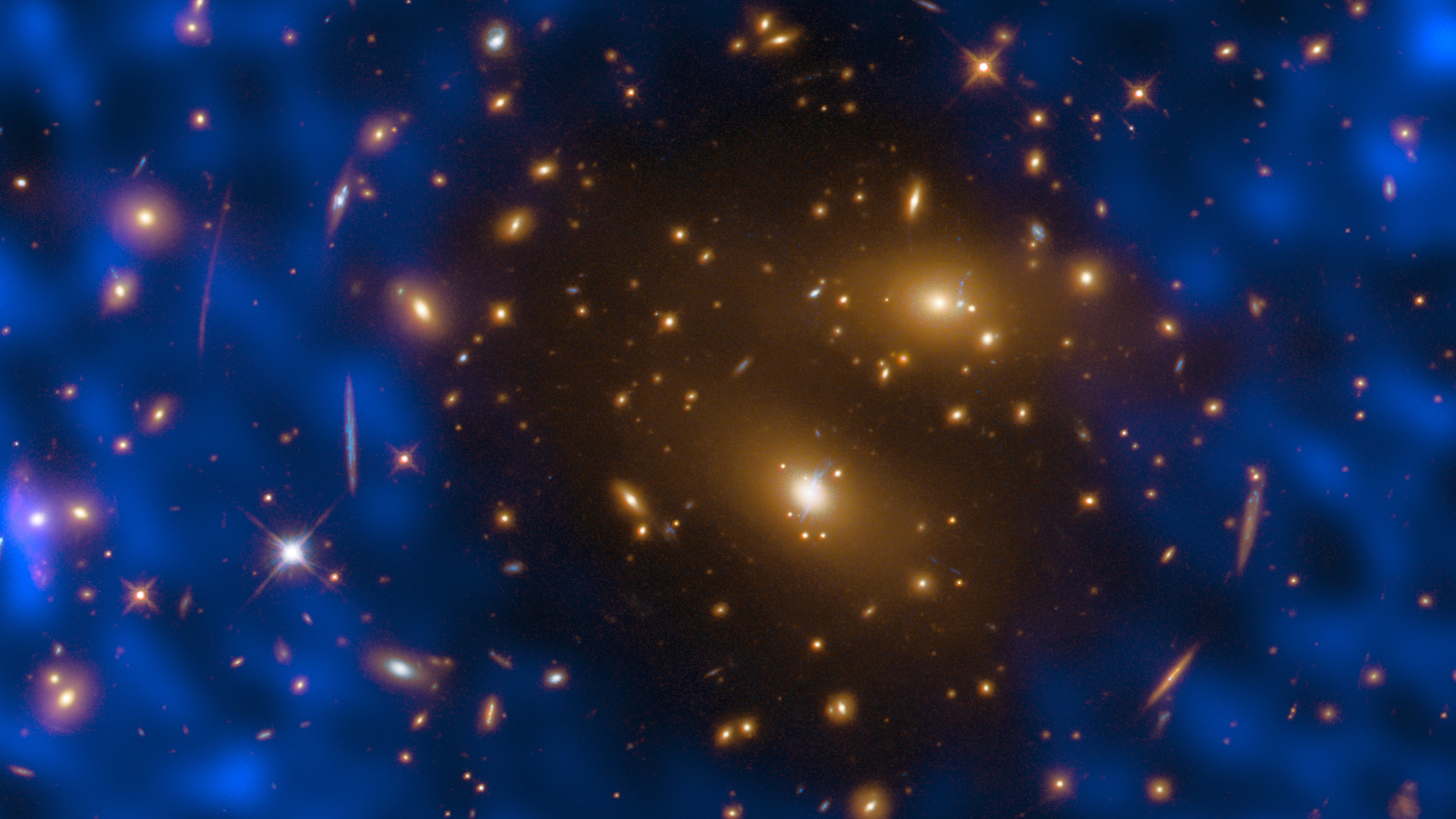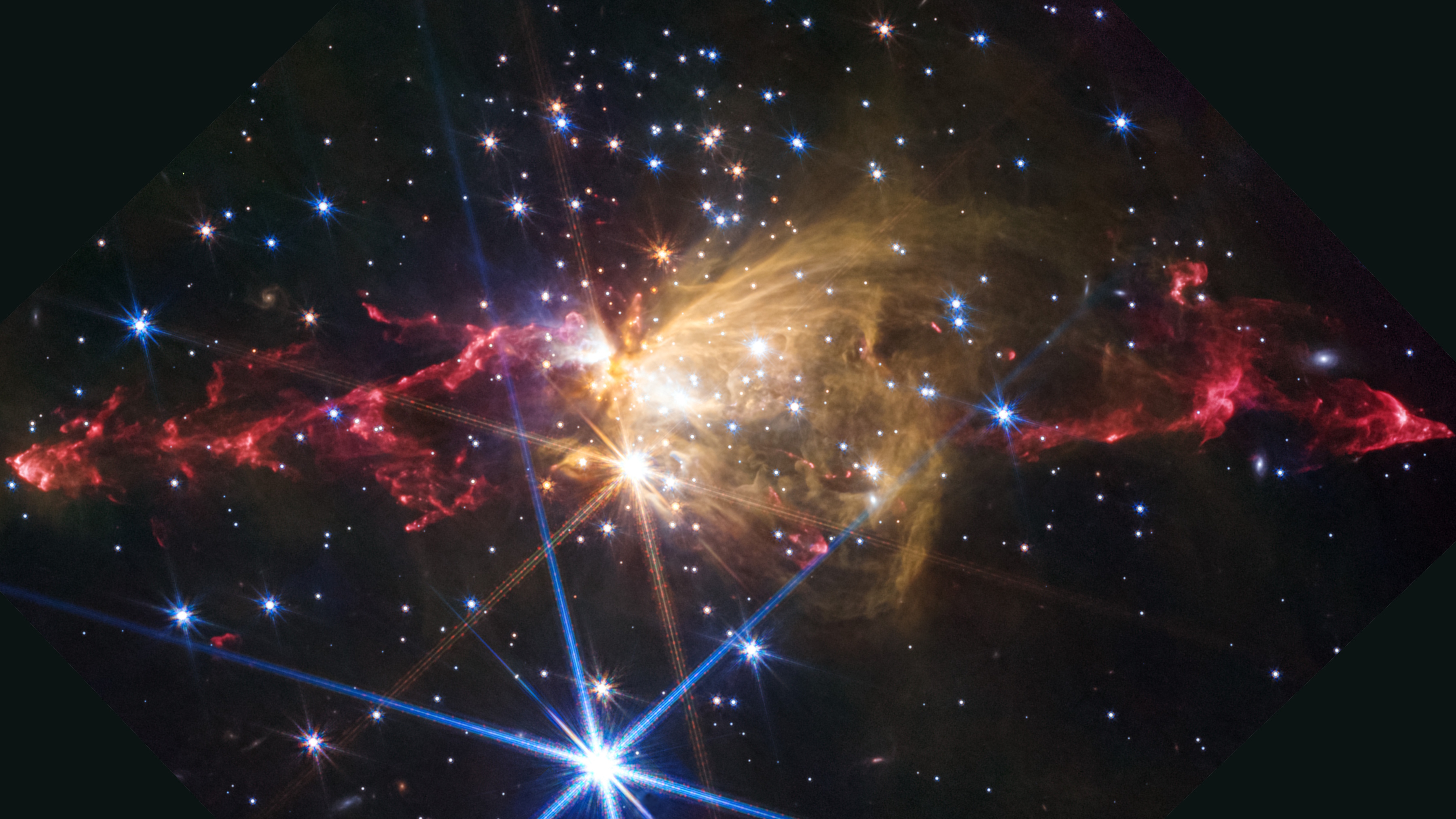


Out there in the vast depths of space, from our Solar System to the farthest reaches of the Universe, all sorts of objects can be found. There are enormous numbers of small bodies, from tiny moonlets to asteroids to comets and more, that simply aren’t massive enough to pull themselves into hydrostatic equilibrium. Beyond that, there are round planetary bodies — numerous moons, dwarf planets, and even rocky worlds themselves — that have enough mass to get that job done. At still higher masses, we find gas giant planets, brown dwarfs, and stars of all different colors, temperatures, and luminosities that will persist in shining for a wide variety of durations.
Once a star dies, there are a number of possible fates that can ensue as well, as a stellar corpse can remain as a white dwarf, a neutron star, or a black hole. And yet, throughout the entirety of this cosmic story, there’s just one parameter that overwhelmingly determines what type of object we’ll wind up with, as well as what properties it will possess: mass. In a straightforward fashion, you can transform almost any type of object into a different class of object simply by adding mass, with the lone exception being a black hole: you can only make a more massive black hole by adding more mass to an already-existing black hole.
Everything else that exists today can be changed by adding enough mass. Here’s what informs those dividing lines in our cosmos.
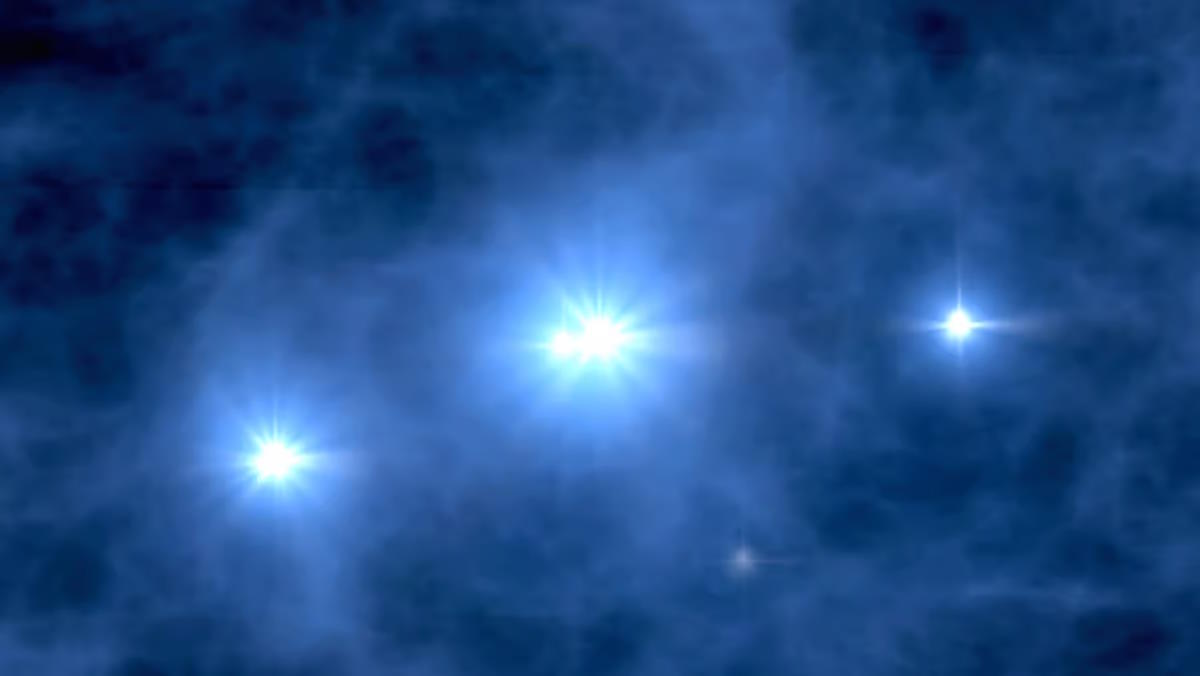
It might seem difficult to believe, but everything that now exists in our Universe owes its ultimate origins to three simple things.
- First, there were initial clouds of pristine material that collapsed to form stars for the very first time, and those stars were where the very first heavy elements were produced: elements heavier than helium like carbon, nitrogen, oxygen, neon, silicon, sulfur, iron, nickel, and cobalt. Those elements then participate in the downstream creation of everything else made of normal matter that forms afterward.
- Second, once those initial stars die, the interstellar medium — made up of now-enriched normal matter — will again gravitate, gather mass, contract, fragment, and collapse to give rise to new stars and stellar systems, this time with a wide variety of masses, as well as “failed stars” that don’t quite have enough mass to ignite hydrogen fusion in their cores, all with their own orbital systems surrounding them.
- And then third, whether those systems still persist or whether they’ve died, they have the opportunity to interact, merge, or even to collide with one another, giving rise to a vast array of possibilities.
This is where nearly everything we know of ultimately comes from: having formed in the aftermath of the deaths of the first generation of stars, and giving rise to objects of a wide array of sizes and masses subsequently.
The reason for this is straightforward: in order to form objects that are made of matter, atoms need to bind together. Hydrogen can form bonds, but the complexity of those bonds is very limited; they can only:
- transfer an electron to a nearby atom/ion, becoming a bare atomic nucleus,
- gain an electron from a nearby atom/ion, becoming a negatively charged ion,
- or bond covalently with another atom, “sharing” its electron with that one adjacent atom.
Helium, meanwhile, hardly ever forms bonds at all, with the largest exception coming when helium is partially ionized (having lost one electron), allowing it to form bonds with other atoms.

Early on in the Universe’s history, before we’ve made any heavy elements, the only way that a cloud of gas can efficiently cool — and it must cool in order to contract — is through radiative cooling from the molecular hydrogen (H₂) molecules and from the helium hydride (HeH+) compounds within it. Those molecules are cosmically important for enabling the formation of pristine stars, but don’t lend toward forming larger structures: dust grains, ices, rocks, etc. If you’re only made of pristine materials, you can form giant clouds and clumps of gas, or you can gather so much mass that you can form a massive star. There’s pretty much nothing in between those two extremes until you sufficiently enrich your Universe, but once you do, you start making a wealth of objects composed of matter.

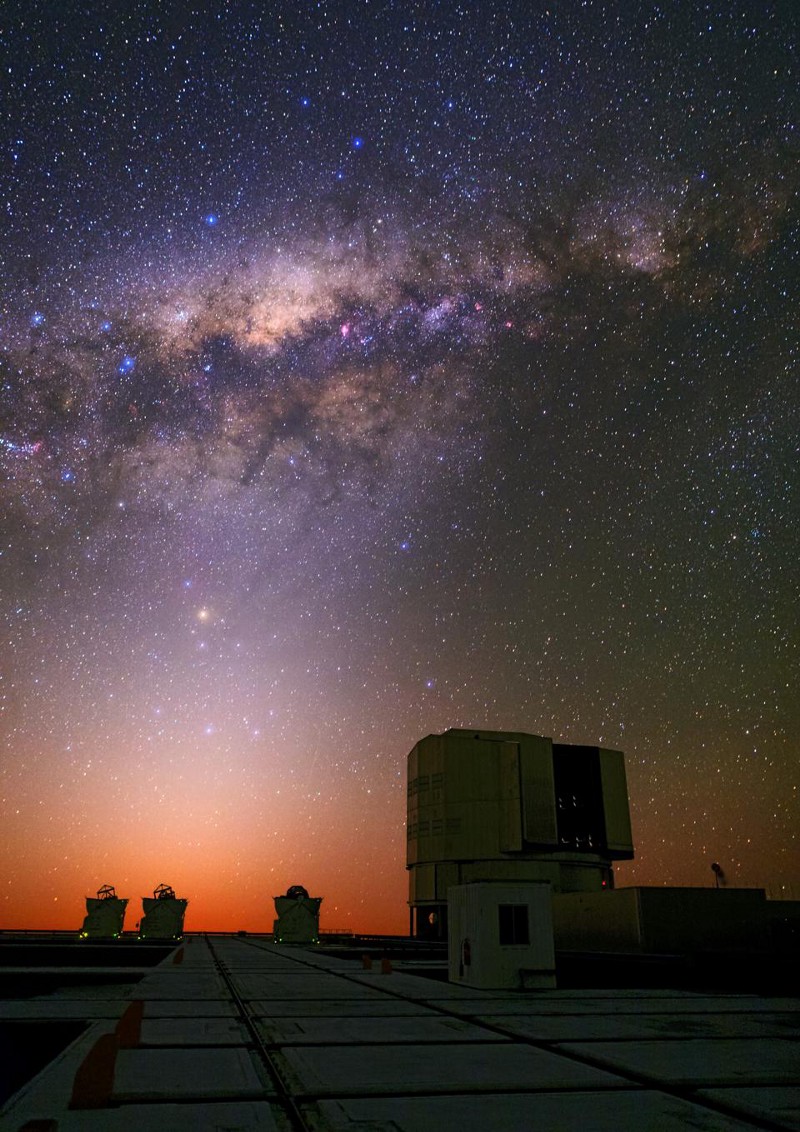
On the smallest scales, the Universe can make dust even under hot conditions, and it can also form ices if the conditions are cold enough. This leads to enormous numbers of tiny grains of rock and/or ice, with most of them between about 10 microns and about 1 centimeter in size. These populate the interstellar medium and zip through the Solar System, with many of them moving fast enough to punch holes in sheet metal, like the hole you see above that shows a puncture on board a satellite. They form the dust that reflects the zodiacal light, they’re the primary obstacle that Voyager 1 and Voyager 2 encounter now that they’ve left the Solar System, and they also can gather together in great numbers in the right environment, giving rise to larger, more massive structures.
One place where “the right environment” exists for exactly that to happen is inside the protoplanetary disks where stellar and planetary systems are forming. It happened here in our own Solar System during the formation of the asteroid belt, Kuiper belt, and Oort cloud. These objects, remarkably, are most often not held together by their own gravity, but rather by the electromagnetic forces: from the inter-atomic and inter-molecular bonds that form between the various dust-and-ice particles that are there. You can add more and more mass, but these objects will remain irregularly shaped up to very large sizes and masses: between 200-500 km in diameter, and up to around 10²⁰ kg in mass.
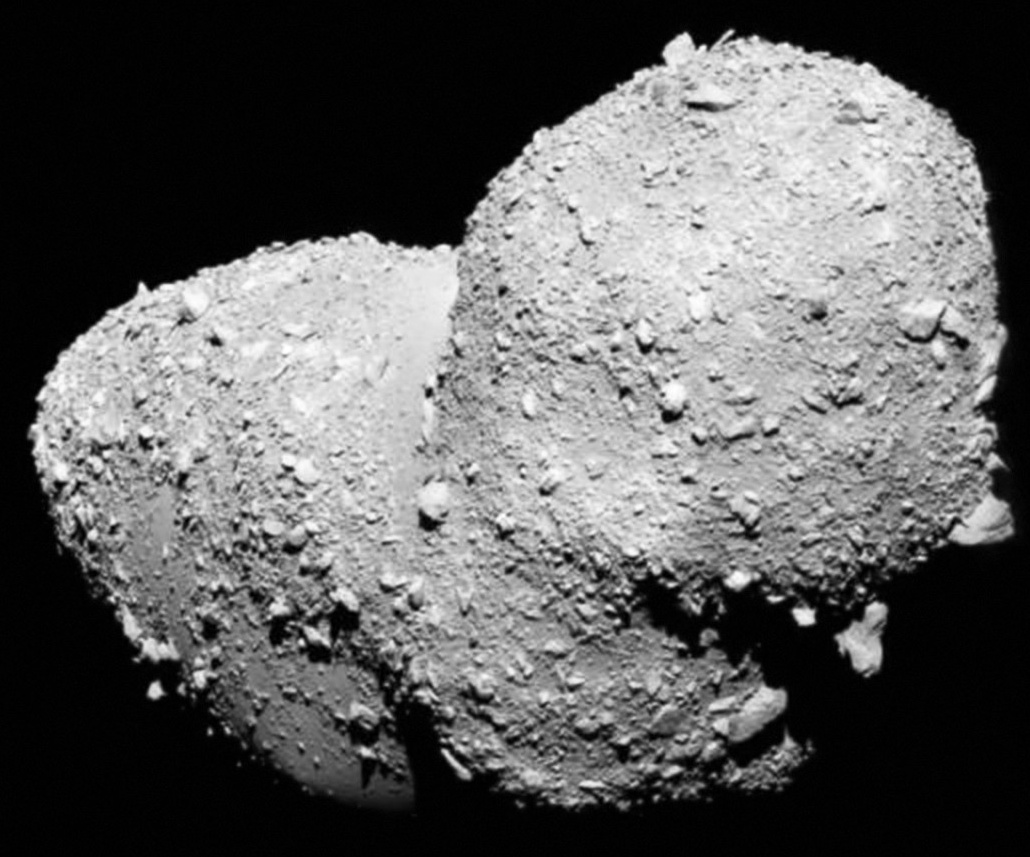
Many objects that we’ve seen up close, including asteroid Itokawa, comet 67P/Churyumov–Gerasimenko, and Kuiper belt object Arrakoth, fall below this size/mass limit and have irregular shapes, but also have features that point to a formation history that’s rich in the merger and assembly of smaller objects. This likely provides a pathway — particularly in dense, matter-rich environments like those found in protoplanetary disks — to building up planetary and lunar systems around stars. If you take enough of this solid material, whether rocks or ices, and bind them together, your object will finally have enough gravity to pull itself into a spherical or spheroidal shape, reaching what geophysicists and planetary scientists call hydrostatic equilibrium.
Many objects in our Solar System have achieved hydrostatic equilibrium: all eight of the major planets, several dwarf planets like Ceres and Pluto, and many of the largest moons in the Solar System, including our Moon, Saturn’s Titan, Neptune’s Triton, and Jupiter’s four Galilean satellites. These objects, unlike the smaller, irregularly shaped bodies we pointed out earlier, are not bound together by electromagnetic forces, but rather by gravity, as there’s finally a sufficient amount of mass for gravity to overcome any and all electromagnetic forces present. Taking our Solar System as a proxy for what’s out there in the galaxy and the rest of the Universe, there are likely tens of trillions of bodies in hydrostatic equilibrium, at least, across the entirety of the Milky Way.
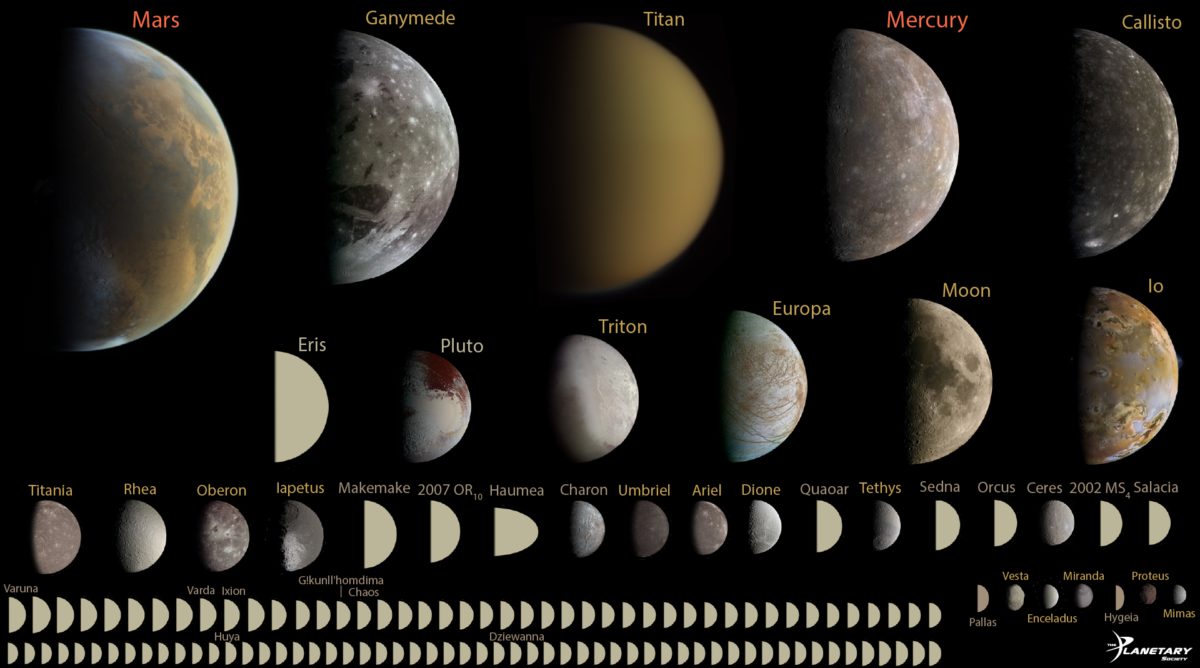
These worlds, based on their sizes, masses, and distances from the dominant source of light and heat in our Solar System (the Sun), can only hold onto, at most, tenuous, thin atmospheres. However, even though we’ve formed many generations of stars over the past 13+ billion years, the Universe is still mostly hydrogen and helium, as is the Sun. Back when stars and stellar systems formed, hydrogen and helium were abundant and everywhere; that is the overwhelming majority of what’s present in the Universe, and represents over 97% of what forms stars and planets. If you’re only a small, low-mass, rock-and-ice-rich world, you won’t be able to hold onto very much of those lightest, most easily blown-off elements.
But if you accumulate enough mass fast enough, and/or you’re distant enough from your parent star and other copious sources of heat and energy, you can hold onto large amounts of that initially-copious hydrogen and helium, leading to a gas giant world instead of a rocky world. We knew that the “line” between an Earth-like rocky world and a Neptune-like gas giant world was somewhere in between Earth’s mass and Neptune’s mass for over 100 years, but it was only with the dawn of the exoplanet era that we discovered precisely where: at about two Earth masses.
In other words, if we ever want to talk about “super-Earths,” we have to realize that Earth is almost as “super” as it gets for rocky planets. Gather more than about 10²⁵ kg of mass together, and you’re destined to become a gas giant, with a large hydrogen-and-helium envelope surrounding you.
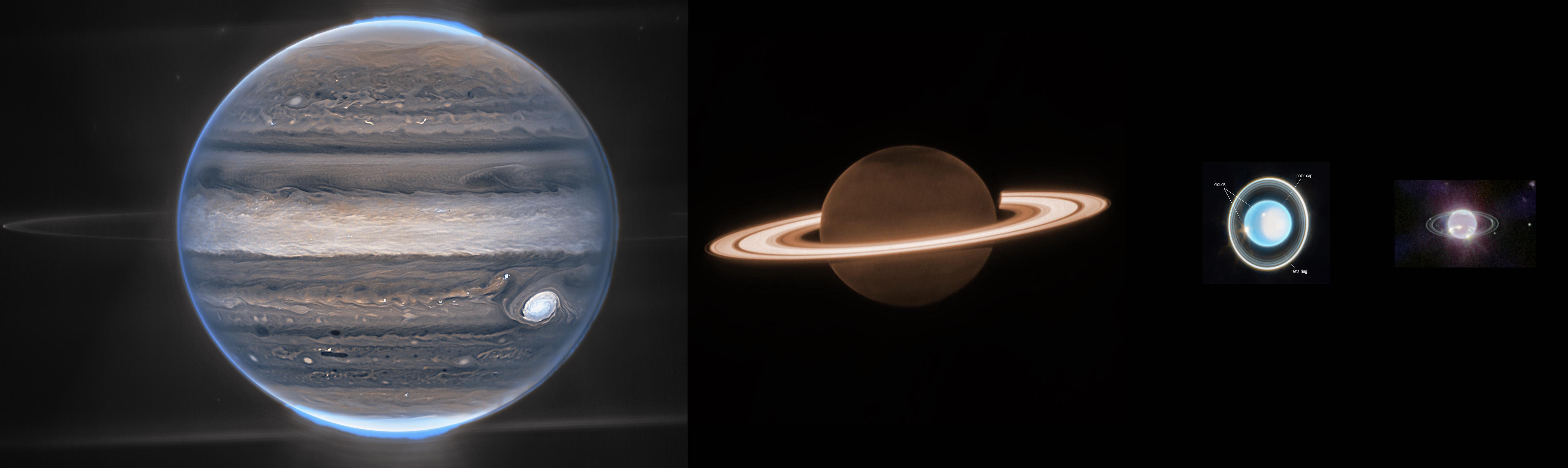
But gas giant planets aren’t the upper limit for how massive something can be, not by a long shot. Jupiter may be the most massive planet in our Solar System, but here in the 21st century we’ve discovered thousands of objects more massive than Jupiter that still haven’t risen to the status of stars. It turns out that if you:
- Gather up to about 13 times the mass of Jupiter, you’ll still remain a giant planet, albeit a special class of giant planet known as super-Jupiter planets.
- Accumulate between 13 and around 75-80 times the mass of Jupiter in one location, you’ll form a special type of “failed star” known as a brown dwarf, where you can achieve deuterium fusion at core temperatures exceeding 1 million K, but where even the hottest part of the core of your object won’t be hot enough to initiate hydrogen fusion.
- Rise up to about 75-80 Jupiter masses or more, you’ll finally hit a core temperature of 4 million K, where hydrogen fusion can at last proceed through the proton-proton chain, giving rise to a true star.
The biggest differences between these classes of object, a super-Jupiter planet, a brown dwarf, or a true star, is again encapsulated in just one factor: mass. However, once you do ignite nuclear fusion in your object’s core, there are enormous differences in properties between stars of various masses.

The more massive your star is, the:
- higher the temperature achieved at the star’s core,
- the bluer the color of the star,
- the larger the physical size of the star,
- the brighter the luminosity of the star,
- and the greater the rate of fusion (and fuel consumption) inside the star,
is going to be. Traditionally, we divide stars into seven different spectral categories, from the cool, red M-stars to the bright, blue O-stars, based on their color-temperature. However, as long as stars are burning through hydrogen in their cores — what we call “spending time on the main sequence” in astronomy due to these stars’ positions on the color-magnitude (or Hertzsprung-Russell) diagram — the color and temperature and luminosity and size of a star is again determined by just one factor: mass.
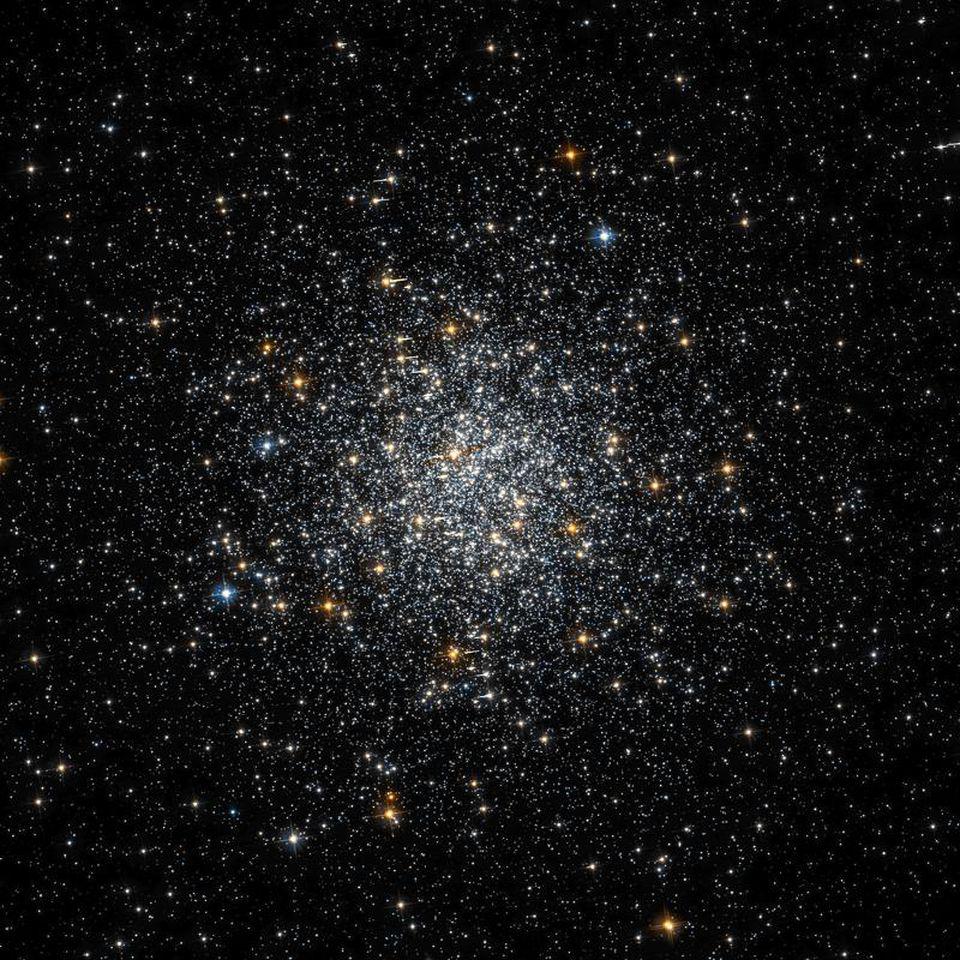
Because the bluest stars are the shortest-lived stars, they burn through their fuel and die the quickest. Therefore, when we look at a population of stars that formed at one moment in time, we can “date” the age of the star cluster by seeing which stars are still on the main sequence versus which ones have evolved off the main sequence and/or have already died. Even inside the oldest such populations, however, we still occasionally find blue-colored, massive stars: blue straggler stars. The reason they exist is not because some blue stars remarkably survive, but rather because two lower-mass, redder stars can merge together, producing a blue one that “straggles behind” the blue stars that formed initially as part of that particular stellar population.
Finally, when stars die, there are three possible fates they typically encounter.
- They can have their cores contract down and cool, gently, forming a white dwarf star: the typical fate for lower-mass stars born with fewer than 8-10 solar masses.
- They can have their cores collapse and implode, triggering a Type II supernova, leaving a neutron star behind, as the degeneracy pressure of the neutrons holds the stellar remnant up against further collapse: typical of stars born with between 8 and around 40 (although this number is uncertain) solar masses.
- Or they can have their cores collapse and implode completely, where a Type II supernova occurs but the only remnant left behind is a black hole: typical of the most massive stars in the Universe.
Yet even for these remnants, whose creation was dependent on their precursor star’s masses, there are several fates awaiting them that are further dependent on how much mass they accumulate.
Add mass to a white dwarf, or merge it together with another white dwarf, and you’ll trigger a fusion reaction: first on the surface, and then, if conditions are right, propagating into the remnant’s core, causing a Type Ia supernova which destroys the progenitor white dwarf entirely. Collide a neutron star with another neutron star, and once you get up to somewhere between 2.5-3.0 solar masses in total, your object will collapse to make a black hole.

But for a black hole, there’s no coming back. Anything you merge a black hole with, or anything you add into a black hole for that matter, only gives you a larger black hole; no other result is possible. The lowest mass black hole we know of is just a shade under three solar masses, and was formed in the neutron star-neutron star merger that created the multi-messenger gravitational wave event known as GW170817. On the other hand, we have supermassive black holes at the centers of galaxies that rise up into the tens of billions of solar masses, and although no black hole reaching 100 billion solar masses has yet been found, it remains a theoretical possibility.
If you simply add more and more mass to any object we know of, you will eventually evolve it into an entirely new class of object. Dust particles can join up to compose large, solid bodies, and if you have a massive enough body, gravitational force will pull it into hydrostatic equilibrium. Grow massive enough, and you’ll maintain an atmosphere and potentially even be able to spawn and house life, but if you grow too massive, you’ll acquire a large envelope of volatile gases. More massive than that, and you’ll ignite deuterium fusion, and with enough mass, hydrogen fusion as well, birthing a star. More massive stars burn hotter, bluer, more brightly, and faster, and a star’s initial mass determines its fate: white dwarf, neutron star, or black hole. Even those stellar remnants can undergo cataclysmic reactions if they merge with a massive enough object, showcasing the power of our Universe to continue to produce cosmic changes, and to do it simply by adding mass to whatever existed beforehand.

The Energy Transition