




















Search
History and Society

For his new book, “The Ghost Lab,” Matt Hongoltz-Hetling spent time with paranormal investigators to understand their relationship with science and society.

Welcome to The Nightcrawler — a weekly newsletter from Eric Markowitz covering tech, innovation, and long-term thinking.

If you want to understand the Universe, cosmologically, you just can't do it without the Friedmann equation. With it, the cosmos is yours.

The “primacy/recency effect” is used by celebrated movie-makers, Broadway composers, and restaurateurs — it can work for you too.

On Earth, our particle accelerators can reach tera-electron-volt (TeV) energies. Particles from space are thousands of times as energetic.

The veteran economist joins Big Think to unpack the new rules of social media, explain tariffs, and recount his adventures in Albania.
6mins
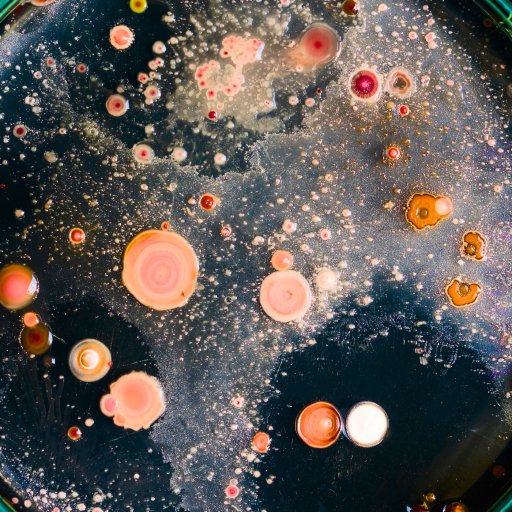
These microbes endured the unlivable. The NASA astrobiologist who studies them reveals what that means for us today

The hunt for extraterrestrial life begins with planets like Earth. But our inhabited Earth once looked very different than Earth does today.

43mins
"If we're related to every living thing on the planet, do we not have a special responsibility for every living thing on this planet? They are really all our relatives."

John Green opens up about his struggle to remain hopeful while writing about suffering and injustice.

Welcome to The Nightcrawler — a weekly newsletter from Eric Markowitz covering tech, innovation, and long-term thinking.

5mins
“When you think about this interconnection of all these tiny causes and effects which add up to the way the world unfolds, it becomes impossible to imagine that we have complete control.”

The COSMOS-Web has just finalized their release of their full field: larger and deeper than any other JWST program. Here's what's inside.

In "Raising AI," De Kai argues that today's AIs are already more like us than we think they are.

A reduced working week, argues Juliet Schor, is part of a sane response to the impacts of AI and robotization on human labor.

For decades, astronomers have claimed the Milky Way will merge with Andromeda in ~4 billion years. Here's why, in 2025, that seems unlikely.

"The stars made our minds, and now our minds look back."
As US science faces record cuts to funding, jobs, and facilities, these 10 quotes help remind us how science brings value to us all.

From bondage to freedom: Baruch Spinoza’s guide to the rational life.

1hr 11mins
“It's a remarkable series of events that were required for us to be here, and that so many things could have happened in a different way that we wouldn't be here at all, both individually, and as a species.”

An atheist's case for why American democracy needs a more Christlike Christianity.

Welcome to The Nightcrawler — a weekly newsletter from Eric Markowitz covering tech, innovation, and long-term thinking.

It rotates on its axis, revolves around the Sun, moves throughout the Milky Way, and gets carried by our galaxy all throughout space.

A comparison of wealth gaps in ancient empires reveals stark differences and lasting consequences.

The Gospels aren’t historical biographies but genre-defining works that blend myth, theology, and a promise of hope.

20mins
“Even if there are beliefs that we hold that are true, if we prevent people
challenging those beliefs, we will lose our understanding of why they're true.”

Many were hoping that JWST would find the first stars of all. Despite many hopeful claims, it hasn't, and probably can't. Here's how we can.

What's the point in fighting a made up monster?

Here in our Universe, time passes at a fixed rate for all observers: one second-per-second. Before the Big Bang, things were very different.

The strange, undulating sound of mathematics.