




















Search
Science and Tech

In "Not Born Yesterday," author and cognitive scientist Hugo Mercier makes the case that misinformation is overrated — and other human foibles are underrated.

"If you’re training an AI to optimize for a task, and deception is a good way for it to complete the task, then there’s a good chance that it will use deception."
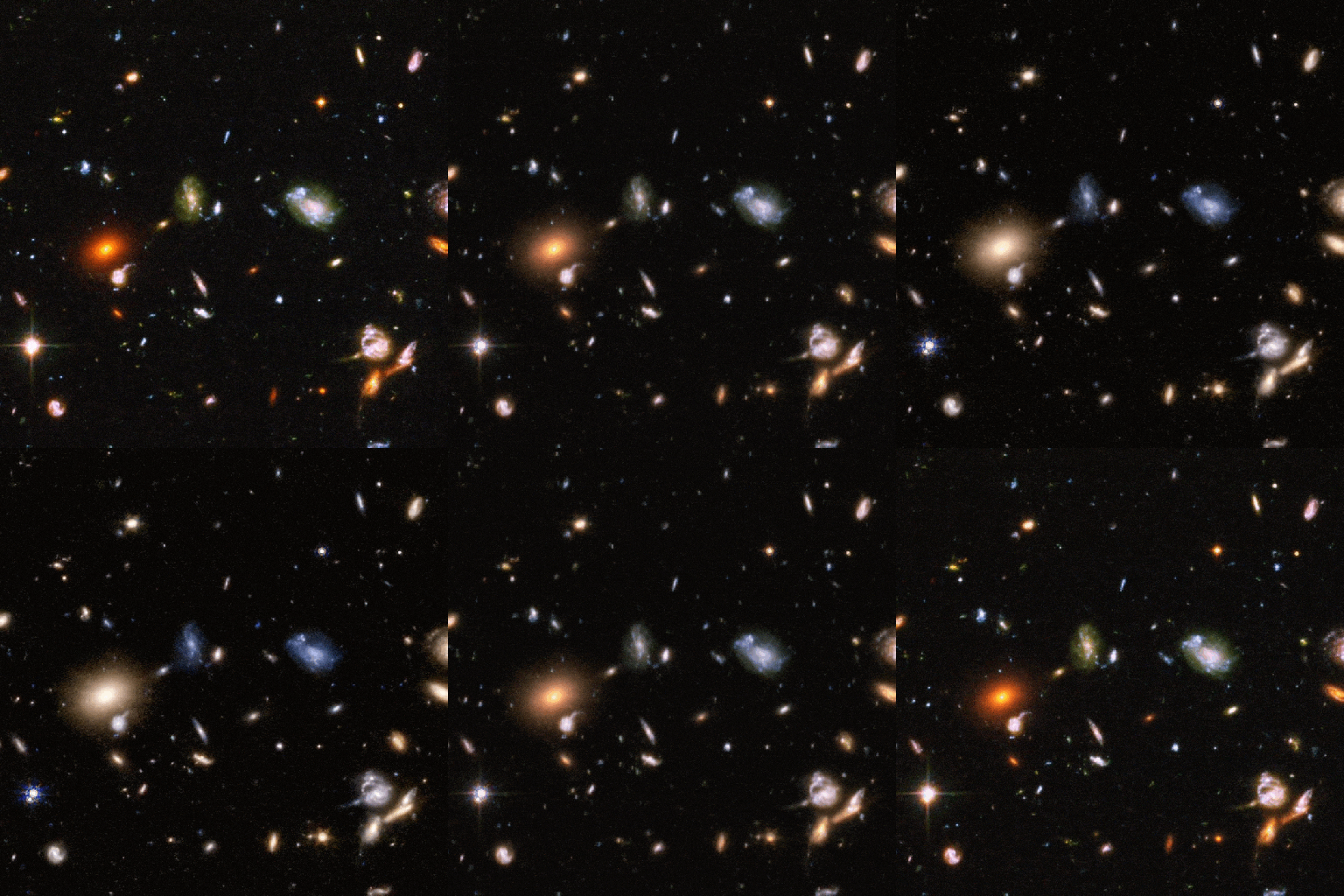
From inside our Solar System, zodiacal light prevents us from seeing true darkness. From billions of miles away, New Horizons finally can.

Hypersonic aircraft can fly at least five times the speed of sound. They would make for terrifying weapons.

9 minutes of cruel history may cure the anti-progress delusion.

The Extremely Large Telescope (ELT) will have a light-collecting power 10 times greater than today's best telescope.

Executive coach Jodi Wellman explains how to “make it to the end with no regrets.”

Adams was infamously scooped when Neptune was discovered in 1846. His failure wasn't the end, but a prelude to a world-changing discovery.

It's knowledgeable, confident, and behaves human-like in many ways. But it's not magic that powers AI though; it's just math and data.
9mins
Dr. Aditi Nerurkar on toxic resilience and the importance of gratitude and breathing.
Unlikely Collaborators

For its 2-year science anniversary, JWST has revealed unprecedented details in "the Penguin and the Egg." Here are the surprises inside.

7mins
Is human overpopulation alarmist hype with disturbing consequences? Oxford data scientist Hannah Ritchie debunks the overpopulation myth.

3mins
The mind-blowing theory that everything is evolving—from minerals to music—explained in 3 minutes by a Carnegie scientist.

As the Sun ages, it loses mass, causing Earth to spiral outward in its orbit. Will that cool the Earth down, or will other effects win out?
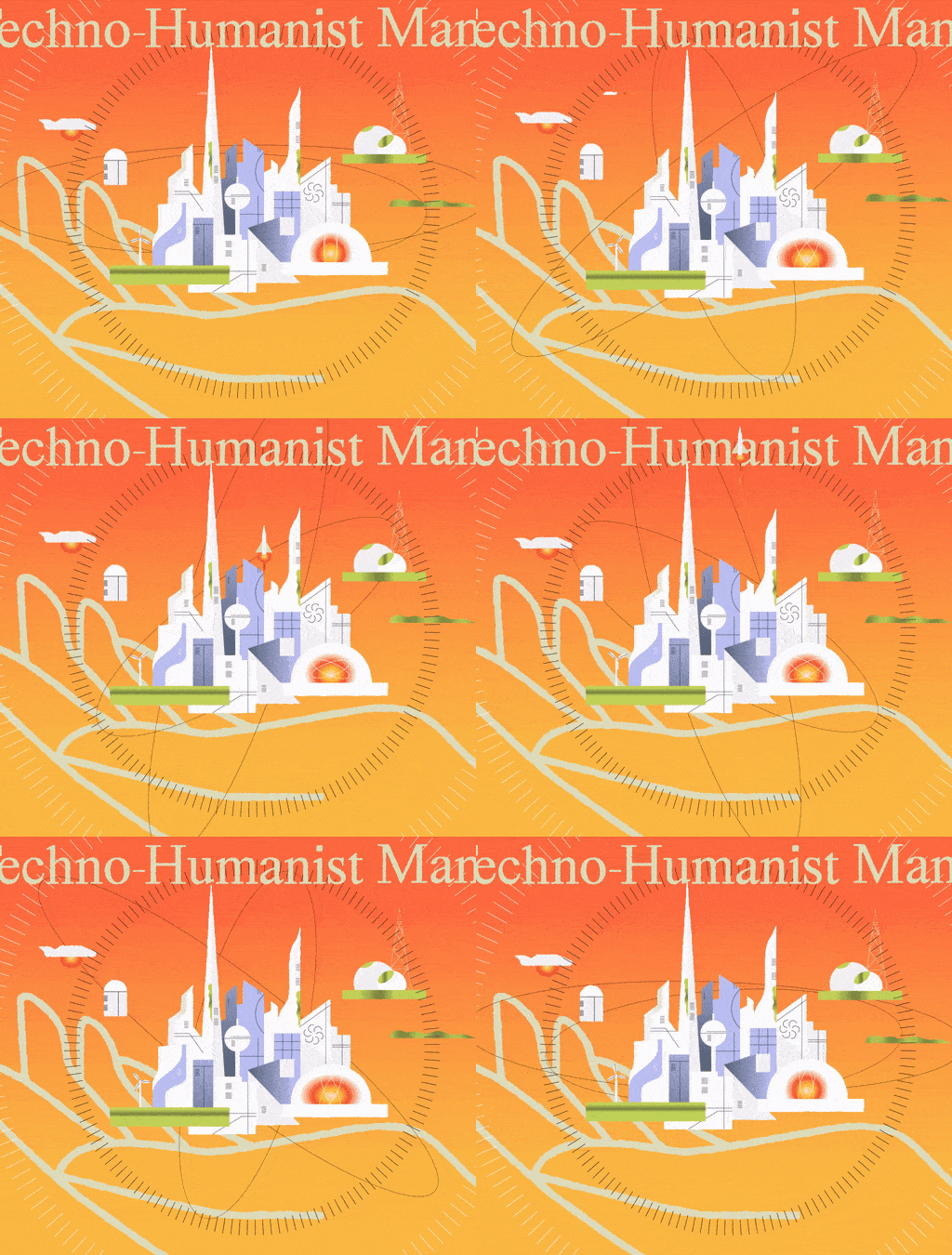
The world needs a moral defense of progress based in humanism and agency.

Our relationship with chatbots is undergoing a sea change — here’s how the transformation will most affect you and your team.

Just 13.8 billion years after the hot Big Bang, we can see objects up to 46.1 billion light-years away. No, this doesn't violate relativity.

We know of stellar mass and supermassive black holes, but intermediate mass ones have long proved elusive. Until now.

The Bullet Cluster has, for nearly 20 years, been hailed as an empirical "proof" of dark matter. Can their detractors explain it away?

"Fasting...should not be demonized for simply suggesting that we take a break from eating once in a while."

On a cosmic scale, our existence seems insignificant and inconsequential. But from another perspective, humans are completely remarkable.

Comparing Elon Musk's Mars rocket to NASA's new ride.

The standard picture of our Universe is that it's dominated by dark matter and dark energy. But this alternative is also worth considering.

The military is courting tech startups to help it win the AI arms race.

The properties of a ghostly particle called a neutrino are coming into focus.

On the largest of cosmic scales, the Universe is expanding. But it isn't all-or-nothing everywhere, as "collapse" is also part of the story.

Physicists have increasingly begun to view life as information-processing "states of matter" that require special consideration.

From the explosions themselves to their unique and vibrant colors, the fireworks displays we adore require quantum physics.

The structure of our Solar System has been known for centuries. When we finally started finding exoplanets, they surprised everyone.

50 years ago, Herman Chernoff proposed using human faces to represent multidimensional datasets. It was a good idea in theory — but a disaster in practice.