
















Social Progress

Social Progress

A young child sits on a sidewalk holding a scraped knee next to a fallen scooter, evoking reasonable childhood independence, with collage elements including a helicopter, art print, and abstract lines.
When can a kid play outside alone? Two parents, one stranger, and the state collide.
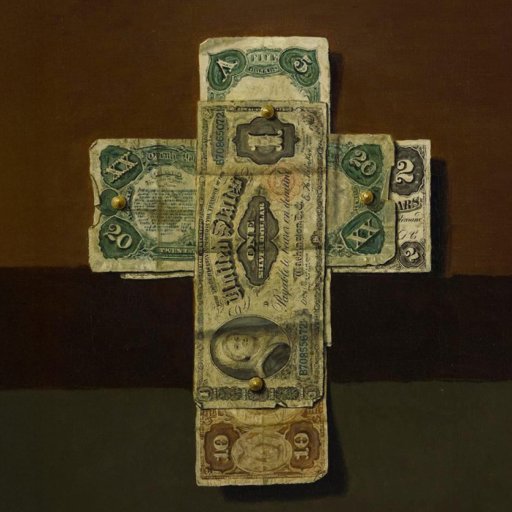
A cross made from various denominations of old U.S. paper currency is fastened together with brass tacks, set against a brown background.
4mins
Americans believe they can outthink suffering. Historian Kate Bowler explains how our obsession with self-help, optimization, and positivity became a kind of secular religion.
A robotic hand holds a striped rocket in front of a green upward-trending line graph on a black patterned background.
Higher productivity drives increases in wealth, wages, and living standards. AI could be just what we need to solve many of today’s problems — if we manage the gains wisely.
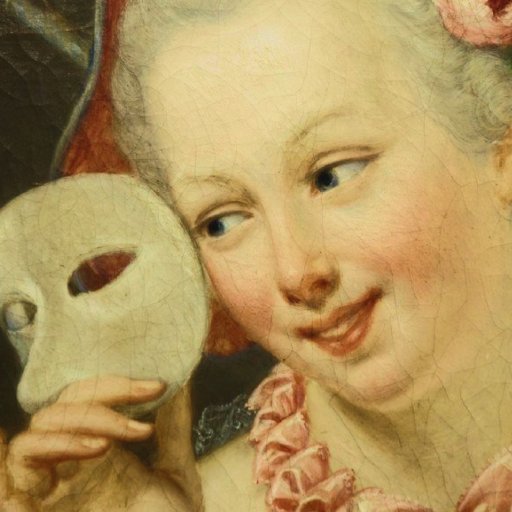
A woman with flowers in her hair holds a white mask near her face and smiles, wearing a ruffled pink collar.
3mins
Toxic positivity isn’t optimism. It’s denial. Historian Kate Bowler explains why our obsession with “good vibes only” is making it harder to cope.
A grid of twelve black-and-white icons representing various scientific fields, with “Artificial Intelligence” highlighted in red under a polygonal brain illustration.
The case that a bipartisan movement structured around progress and reform may be reaching critical mass.
A graphic contrasts pragmatists and purists in moral philosophy, with photos of activists and protest scenes connected by arrows labeled "progress.
History shows that progress often depends on activists at both ends of the spectrum.
Five books are displayed upright in a row: "Gödel, Escher, Bach," "Man’s Search for Meaning," "Red Mars," "The Road to Reality," and "The Structure of Scientific Revolutions.
These expert-recommended books reveal how big ideas can shape — and sometimes redefine — human progress.
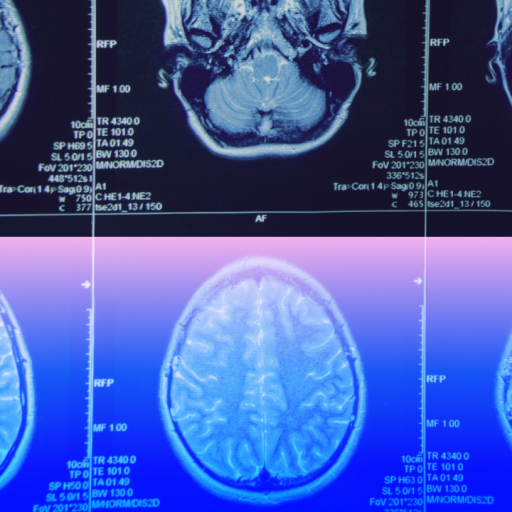
Six brain MRI scan images are arranged in two rows, showing various cross-sectional views of the human brain, with the bottom row featuring a blue and pink color overlay.
3mins
From neuroscience to philosophy, experts reveal why compassion may be the most important human skill we have.
Unlikely Collaborators
The word "liberalism" in white lowercase text is centered on a black background, surrounded by rough red circles drawn with a crayon effect, visually emphasizing the ongoing discourse on liberalism.
In “On Liberalism," Cass Sunstein argues that liberalism can only endure if we reclaim its core commitments and revive its spirit of freedom and hope for the future.
Pencil drawing of an adult hand holding a child's hand, surrounded by colorful, illustrated borders with various faces and map elements.
Sikh American scholar and historian Simran Jeet Singh on helping kids imagine — and create — a more empathetic world.
John Templeton Foundation
Collage with a man in a suit, stacked mugs, an upside-down creature, dice, and the text "THE NIGHTCRAWLER" at the top on a dark grid background—hinting at the power of intuition amid surreal imagery.
Welcome to The Nightcrawler — a weekly newsletter from Eric Markowitz covering tech, innovation, and long-term thinking.
Krel and Hana Koecher celebrate with StB colleagues after returning to the Eastern Bloc.
In this excerpt from "Agents of Change," Christina Hillsberg tells the story of Martha “Marti” Peterson, the first female case officer stationed in Soviet Moscow.
Five men, immersed in conversation, sit indoors on a blanket, eating from metal bowls. Despite the cloud of ignorance surrounding them about modern science, they share stories and laughter as a red bowl rests prominently at their center.
If we wish to tackle the very real problems society faces, we require expert-level knowledge. Valuing it starts earlier than we realize.
Collage featuring a construction worker, a person with a hand on their back, silhouettes, and the text "The Nightcrawler" in green and black, highlighting the power of in-person connection.
Welcome to The Nightcrawler — a weekly newsletter from Eric Markowitz covering tech, innovation, and long-term thinking.
A baby with blonde hair and blue eyes looks upward with a curious expression against a blue background.
4mins
“In our current social and physical climate, there's a sense of fatalism, a fear that bringing someone new into the world might be a bad thing.”
Children in a classroom use tablets with headphones while a teacher writes on a chalkboard.
With undersea cables, AI education, and more, the tech giant is helping create Africa’s “digital decade.”
A person sits on a sidewalk near an escalator entrance, next to an overturned shopping cart on a metal grate.
An evidence-based policy movement is arming the fight with tools and programs that are more effective than ever before.
A collage featuring hands holding a plant, additional hands in sepia tone, a grid background, orange accents, and the text "Reclaim Meaning" with the number 4.
What if the barrier to a fulfilled life isn’t technology but culture?
World map highlighting the Brandt Line, dividing the Global North and Global South across continents.
In 1980, Willy Brandt drew a line across the map that still influences how we think about the world.
A person with glasses and a black blazer is looking directly at the camera against a black background.
1hr 15mins
“Why is it that the quality of our information did not improve over thousands of years? Why is it that very sophisticated societies have been as susceptible as stone age tribes to mass delusion and the rise of destructive ideologies?”
A grayscale photo of a man is on the left page of an open book, while the right page features an illustration of a white dove with red accents on a yellow background, symbolizing freedom.
Historian Timothy Snyder talks with Big Think about how true liberty requires both negative and positive freedoms.
Abstract design with human profiles, a silhouette of a person walking, and text reading "The Happiness Paradox 4" on a grid background.
Achieving values and pursuing growth is the real secret to a fulfilled life.
Film strip collage of abstract images—including faces with X marks, colorful patterns, and nature elements—evokes the vibrant allure of "Crazy Rich Asians.
"No matter how long you’ve been doing a job or how good people say you are, you need to care as if you’ve never done it before."
Image with a split view: the left half shows a black-and-white image of Earth, the right half depicts a grayscale crowd scene. Text overlay: "More Humans Are Better," with the number "3" in the top right corner.
In a world of rising cynicism, a celebration of our capacity to create, adapt, and thrive.
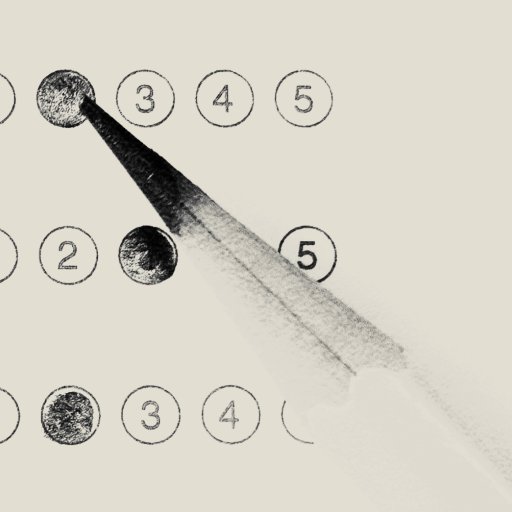
A pencil fills in the first answer bubble on a multiple-choice test sheet, option "1" for question 90.
1mins
Testing is an attempt to measure intelligence. But is intelligence really what’s getting measured? A neuroscientist weighs in:
A book titled "How To Be Authentic: Simone de Beauvoir and the Quest for Fulfillment" by Skye C. Cleary, exploring the path to happiness, is displayed against a background of rippling water.
The philosopher Skye C. Cleary explores what being authentically happy looks like in a world where so many can't be.