This content is locked. Please login or become a member.
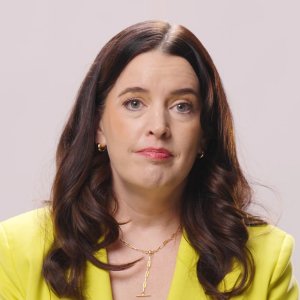












Toxic positivity has become a cultural system in America, says historian and professor Kate Bowler.
She traces how optimism became an emotional mandate in American life: a belief that bright sides and silver linings can solve anything. But when positivity refuses pain, it stops being hopeful and becomes denial.
Drawing on personal experience and cultural analysis, Bowler reveals how forced optimism erases nuance, stigmatizes grief, and leaves us unprepared for the parts of life that don’t resolve. Some things aren’t meant to be mastered — they just hurt. Naming that, she argues, is the first step toward something more honest, and more human.
KATE BOWLER: Even the most well-intentioned kinds of optimism really does have a dark side.
Optimism can transform into denial. Toxic positivity by definition is about a stubborn optimism that refuses reality. Toxic positivity is an aggressive belief that only optimism and hopeful emotions are going to serve you. It fundamentally resists contradictory information. It will say, I don't believe you. Things are going to get better, and it is one of the most dominant emotional registers in our culture today.
Toxic positivity is like self-help titles, good vibes only. Don't worry, be happy. When I got cancer, people often told me that everything happens for a reason, and what they meant was that I will learn important lessons that will eventually enrich my life if it doesn't kill me.
But some things happen for no good reason. Sometimes in life we have to step up to the edge of the great mystery and in the face of mystery we can't always say, we will know why.
If we don't have a wider range than a toxic positivity, we threaten to stigmatize negative emotions and then eventually start to pathologize our own humanity.
American culture is a very fix-it, hyper individualistic, very solutions-oriented culture, and so in the face of pain, they will bright-side a future in which everything will work out. Entire models of healthcare have been grappling with this forever, as people have been trying to figure out just what level of optimism is useful and at what point does it no longer serve us.
Most of the best work around end-of-life patient care like hospice has been about moving toward comfort care, and produce very loving results for patients who need to accept their own mortality. Instead of a version of heroic medicine in which suffering then becomes key for the person going through a difficult experience to demonstrate their attempt at self-mastery to conquer the pain.
Our culture of "just look on the bright side" is not making us happier for a couple reasons. One, crowding all of our feelings to one end of the emotional spectrum is life-denying and reality-denying, because reality will always creep in, there will always be a complicated relationship in the family, a job that isn't working out the way you want to the other would be because it really never addresses the social conditions that make us deeply unhappy in the first place.
If you want to look at the happiest countries on earth, they're not really talking about happiness. It's more about ordinary trust that makes people feel at ease, like they don't have to scramble to secure the conditions of their belonging. Our ability to access affordable daycare, housing, proximity to parks, freedom to worship, a culture that's obsessed with mood management is not likely going to be a very happy culture in the end.
Reality is both beautiful and hard. Sometimes it helps me to say, "you are devastated because it was devastating." Like the faster I can name a difficult emotion and experience, the more I feel settled and like grounded in reality.