




















Search
Space Exploration

Supermassive black holes at the centers of galaxies gobble up whatever matter ventures too close, becoming active. Here's how they work.

Methane is a shorter-lived but more potent greenhouse gas than carbon dioxide. Cleaning it up could have a quick impact on global warming.

We're used to scientists telling us about the math and physics behind astronomical events. But what does studying space make us feel?

Astronomers have been looking for radio waves sent by a distant civilization for more than 60 years.

All across the Universe, planets come in a wide variety of sizes, masses, compositions, and temperatures. And most have rain and snow.

Thanks to a couple of rovers, we know Mars was once blue.

The largest hazardous asteroid found in the last 8 years showcases a little-known class of planet-killers. And we're woefully unprepared.

In 1974, Stephen Hawking showed that even black holes don't live forever, but emit radiation and eventually evaporate. Here's how.

Organic molecules can be produced by living or non-living systems. But the recent findings are very intriguing.

Most exoplanets have been found around single stars via the transit method. But binary star systems might contain even more of them.

Quantum entanglement may remain spooky, but it has a very practical side.

The DART mission tested whether it's possible to deflect an asteroid by crashing something into it.


With its first view of a protoplanetary disk around a newly forming star, the JWST reveals how alone individual stellar systems truly are.

It's the very closest stars to us that hold the key to unlocking the possibilities for life in star systems all throughout the Universe.

It could one day fuel nuclear fusion reactors.
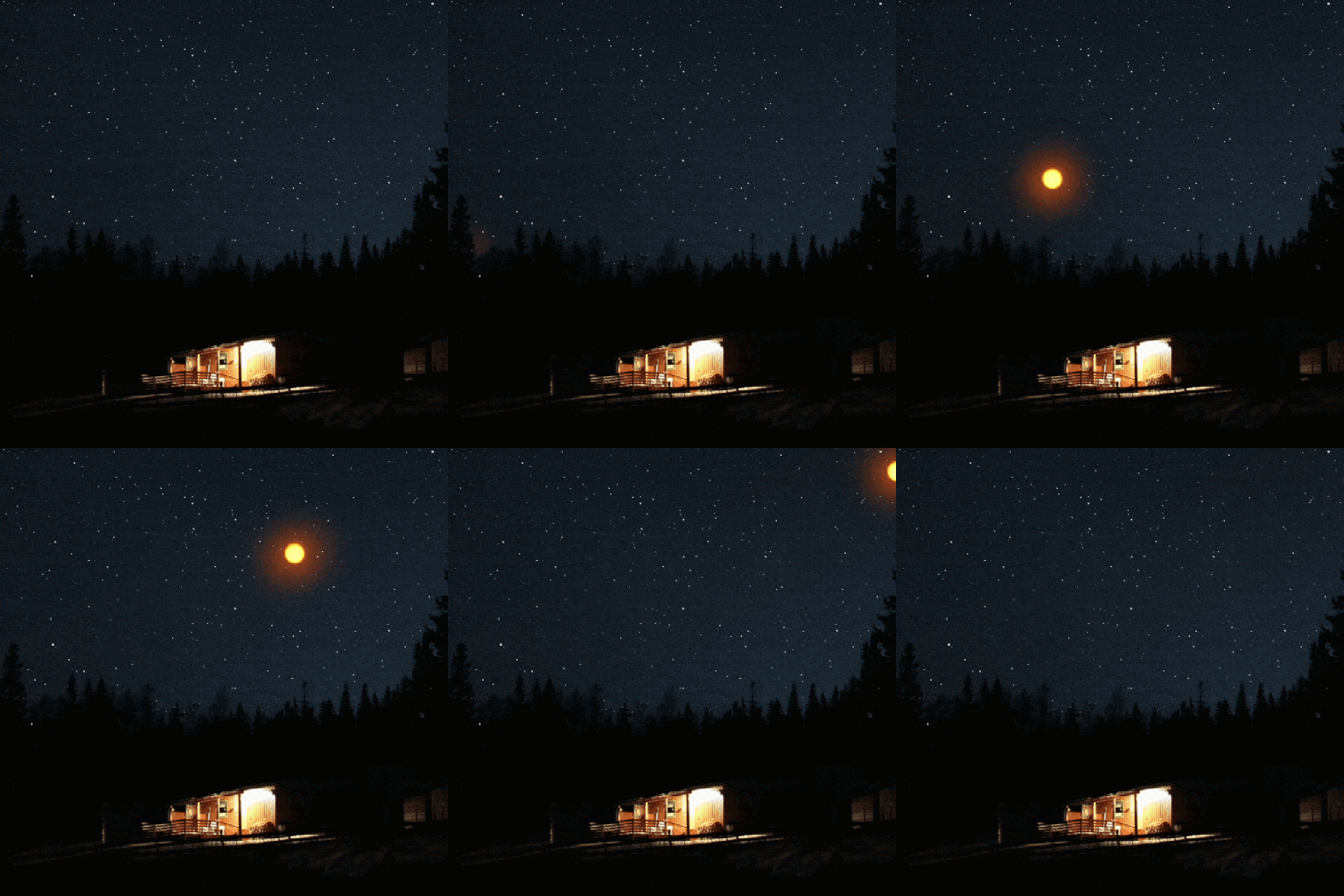
UAP are no laughing matter anymore.

Yes, NASA's Perseverance rover found organics on Mars. So did Curiosity. Unfortunately, that doesn't mean anything in the search for life.

“The more we understand ourselves and the universe, the more magnificent it is.”

You would think that with all our technology, like the James Webb Space Telescope, we would know how big the Universe is. But we don't.
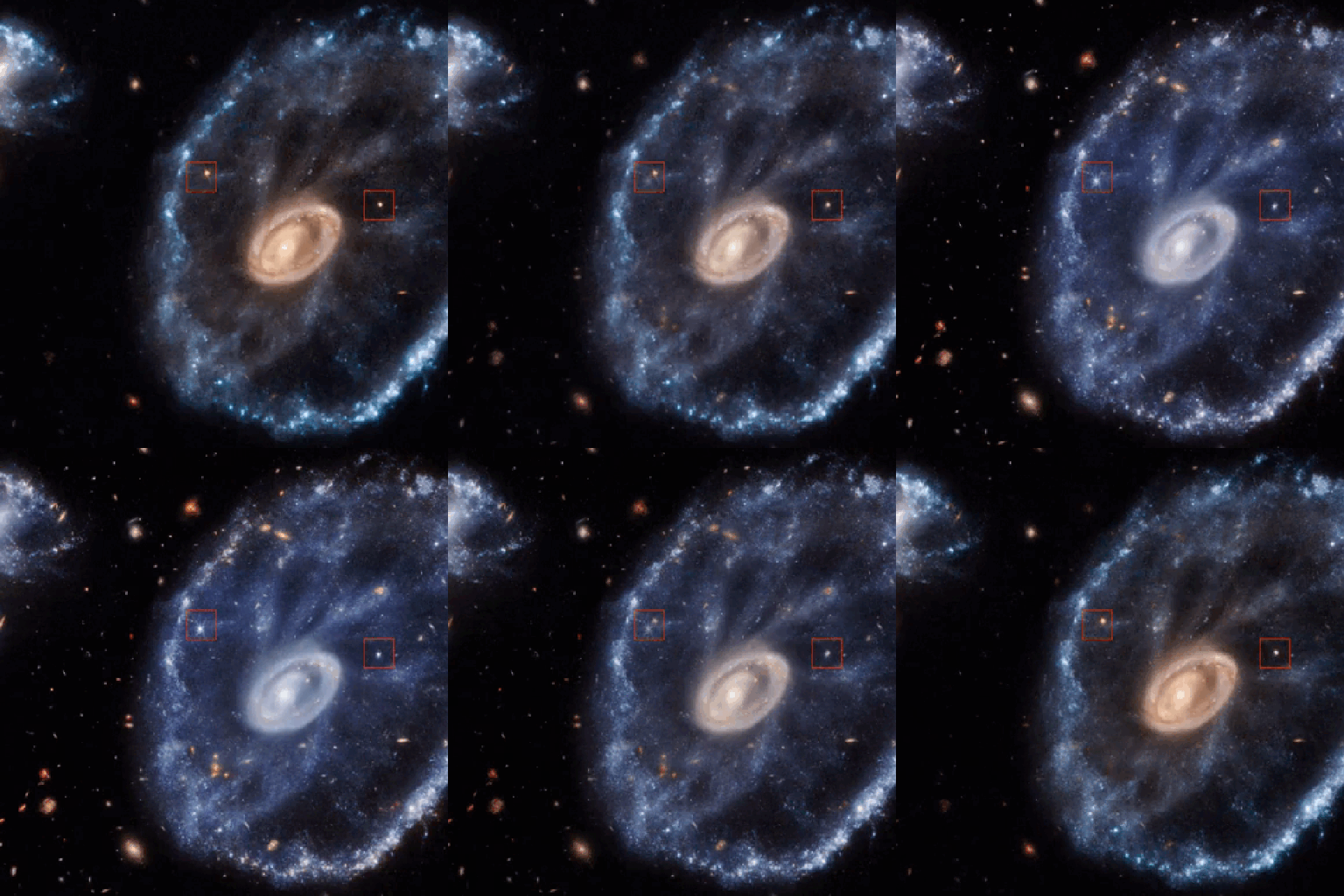
The first set of James Webb's images blew us all away. In just 2 mere months, it's seen highlights that no one could have predicted.

As recently as 1990, we didn't know of any planets beyond our Solar System. Today, with 5000+, we're deep into the weeds of how they form.

Following the advent of human space flight, NASA began naming missions after children of Zeus.

One book will gather all topics on the search for life in the Cosmos.

Asteroid collisions aren't always bad.

Venus Life Finder could launch as early as 2023.

Spaceguard shows that we can manage risks to the extinction of humanity — if only we put our mind to it.

Remembering Frank Drake, who transformed the search for alien life & extraterrestrial intelligence into a full-fledged scientific endeavor.

The last 70 years have taken us farther than the previous 70,000. But can we accomplish more than creating a record saying, "We were here?"