
Progress studies is a diverse space, bringing together people with varied interests, priorities, and areas of expertise. What has united this bunch intellectually, though, has been the shared belief that the world is not as it could (read: should) be, and we have both the ability and the responsibility to rewire its systems to create a materially abundant, culturally optimistic future.
At Progress Conference 2025, though, I noticed something new in the progress community.
In the past, its discourse was solidly grounded in specific problems (e.g., outdated policies, technical challenges) and their potential solutions (e.g., policy reform, technological innovations). But I’m now noticing more conversations about the meta-problem of implementation or, as we call it in the YIMBY (“yes in my backyard”) community, “theories of change.”
This shift in the conversation is a sign of the progress community’s maturation.
To a first approximation, many of the problems that concern the progress community can be thought of as a simple set: a defined problem plus the solution believed to be the best out of all the options:
- AI requires more energy. Build nuclear.
- Science is slow. Change funding to accelerate it.
- Housing is scarce. Build more housing.
One step removed, though, is the question of how to implement the given solution.
By way of metaphor, this is like identifying a physical ailment (the problem), concocting a pharmaceutical intervention (the solution), and then needing to determine the best delivery method for your wonder drug (the meta-problem of implementation). In many cases, the efficacy of the solution is directly tied to the delivery method — imagine a vaccine that does nothing if administered as a pill, but that generates a protective immune response if delivered via an injection.

This shift in the conversation is a sign of the progress community’s maturation: It’s applying meta-science thinking to the social world, and this is where change scales.
From solutions to implementation
During Progress Conference 2025, I discussed and debated several friction points for implementing solutions with fellow attendees, including the need to identify and inform the right people and institutions, the difficulty of matching a good idea with the right business model, and the challenge of navigating scenarios where someone else’s idea has to lose.
This conversation is well-trodden ground within YIMBY circles.
YIMBY Action (where I serve on the board) operates with a people-centric theory of change. As Executive Director Laura Foote puts it, “Politicians don’t listen to polls.” Instead, they overindex on the loudest people in the crowd and the most recent voice they’ve had in their ear. Consequently, we put a lot of effort into enabling YIMBYs to be in rooms with state and local policymakers, preferably armed with megaphones.
Many of the other policy-oriented organizations in attendance at the conference (including many of the other YIMBYs) have a more elite-driven worldview. Broadly speaking, this means they spend a lot of their time drafting model legislation, writing white papers to get the best ideas into the right ears, and walking the halls of power to help broker deals and cajole elected officials behind closed doors.
The need for political power is just one type of implementation challenge that the progress community faces.
These differences don’t mean our organizations are in stark disagreement with one another — it’s more that we have differences in prioritization. Call it an intellectual division of labor. It’s something we’ve certainly cultivated within YIMBYism and that we should encourage elsewhere. After all, if there’s more than one way to skin a cat, there are probably more than a few paths to bringing back nuclear power.
Regardless of strategy, YIMBYs operate in a hostile political ecosystem. With respect to the housing crisis, the policy is settled science: to lower housing prices, we must increase supply. Further, everyone knowledgeable on the topic believes that legacy land-use institutions are a binding constraint. YIMBYs still have work to do because a subsection of society extracts benefits from the status quo — when it comes to housing policy, we’re reforming a system that fights back.
The meta-problem of needing political power to implement policy solutions shapes how the YIMBY community approaches progress. But it is just one type of implementation challenge that the broader progress community faces.
Criticism through creation
Blake Scholl, CEO of Boom Supersonic, is on a mission to resurrect supersonic flight as a viable commercial enterprise. He was one of the keynote speakers at Progress Conference 2025, and according to his talk, the lack of a viable business model for supersonic flight is the reason we can’t fly from San Francisco to New York in just two hours.
In Scholl’s telling, the original sin was the fact that national governments developed supersonic flight, and not as viable commercial services, but as prestige projects. The Concorde was only in service for a couple of decades, and toward the end of its run, tickets on transatlantic flights could cost tens of thousands of dollars (adjusted for inflation). This kept ticket sales low and contributed to the eventual retirement of the technology from commercial use.
Scholl thinks his team can succeed where others have failed. His thesis is that by staying focused on developing a product where the economics make sense from the get-go, Boom can start with an up-market product and establish a beachhead. That early success will provide the time and space the company needs to continue iterating on the technology until it is eventually able to provide cheaper supersonic flights to the rest of the market.
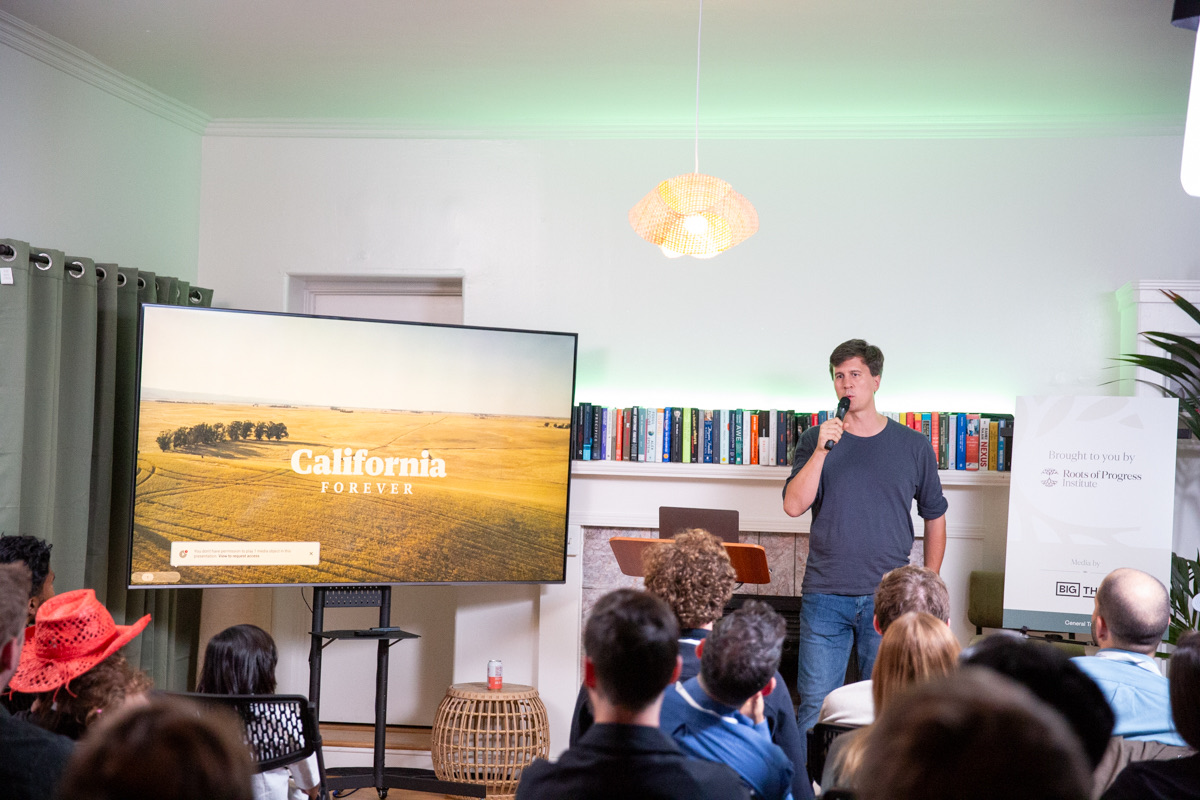
This approach is what I think of as “criticism through creation.” Scholl believes the world could and should have commercial supersonic flight. He has a story explaining why it’s absent: a bad business model led to economically non-viable tech. He also has a solution: create better tech through a better business model. And a theory of change that boils down to: “Fine, I’ll do it myself.”
We could imagine someone with the same priority — resurrect supersonic flight — working on policy to reshape incentives or taking the Nader-esque approach of being a noisy consumer advocate. One issue might be tractable via multiple approaches, and different issues can require fundamentally different forms of intervention — something I was reminded of by Tom Kalil, CEO of Renaissance Philanthropy.
Spreading good ideas
At Progress Conference 2025, Kalil gave an absolutely illuminating talk, titled “Creating a Marketplace for Outcomes,” during which he detailed all the ways science funding is underoptimized for producing breakthroughs and how we can accelerate science by changing the ways in which we fund research.
Kalil, who worked on science policy in both the Clinton and Obama administrations, explained the dominant paradigm for scientific funding is currently a federal loan guarantee, which, he pointed out, is only taking on risk against failure and doing nothing to encourage success. He then went through a menu of alternative funding models designed to encourage more productive research, including advance market commitments and incentive prizes.
Market commitments may sound familiar due to the COVID-19 pandemic, during which governments derisked vaccine development by pre-purchasing a certain number of doses ahead of time. As an example of incentive prizes, Kalil used the DARPA Grand Challenge, which was totally new to me.
We can use funding to create incentives for researchers and reshape the applied science ecosystem.
In 2004, DARPA (the U.S. Department of Defense’s Defense Advanced Research Projects Agency) created a competition to instigate the development of autonomous vehicles. Entrants would race their autonomous vehicle on a 142-mile course, with the first team to cross the finish line in less than 10 hours receiving a $1 million grand prize. Though the initial challenge was inconclusive (none of the entries successfully navigated the competition course), the winning team from 2005 was promptly hired by Google, which ultimately led to the creation of Waymo.
The lesson: We can use funding to create incentives for researchers and reshape the applied science ecosystem.
During Q&A, someone in the audience asked Kalil why we don’t see more examples of these approaches if they are so good. His response, which has haunted me, was that these types of programs just aren’t widely known. The challenge now is to broadly disseminate information about them and get the concepts in front of a certain set of federal bureaucrats.
From Kalil’s talk, I got the impression that the intellectual markets in science research are just inefficient. He didn’t name gatekeepers or call out any actors enriching themselves via the status quo — he just noted that the relevant policymakers need to get turned onto some new ideas. This reminded me of the proverbial Chicago School economist seeing a $100 bill on the sidewalk and deciding it must not be real — if it was, someone would have already picked it up.
While my YIMBY mind automatically assumes a hostile political economy, Kalil seemed to be describing a problem that could be solved via a little proselytizing. It was a good reminder for me that, at least for some problems in the world, there may still be meat on the bone of education and thought leadership.
Nietzsche’s Übermensch vs. Hayek’s entrepreneur
Throughout the conference, there was a throughline that individual initiative is important — after all, at some point someone has to do something about a problem. Understanding how the progress community thinks about individual action is necessary in order to fully understand how people think about theories of change.
The term that those in the community use for people who readily take initiative is “high-agency individuals.” To distill the vibe into something tangible: being high-agency is to treat obstacles not as blockers, but as merely preliminary challenges to overcome.
This can sound a little Nietzschean or even smack of John Galt, which isn’t necessarily off-base. Many of the problems the progress community wants to fix will require overcoming inertia, so a certain force of will and a level of ambition will be required. And yet, I don’t know if that’s the best way to think about agency.
Let’s reconsider Blake Scholl, the CEO on a mission to resurrect supersonic flight. It would be very easy to interpret him as some heroic Randian industrialist. But after listening to him, what stuck out to me most was his curiosity.
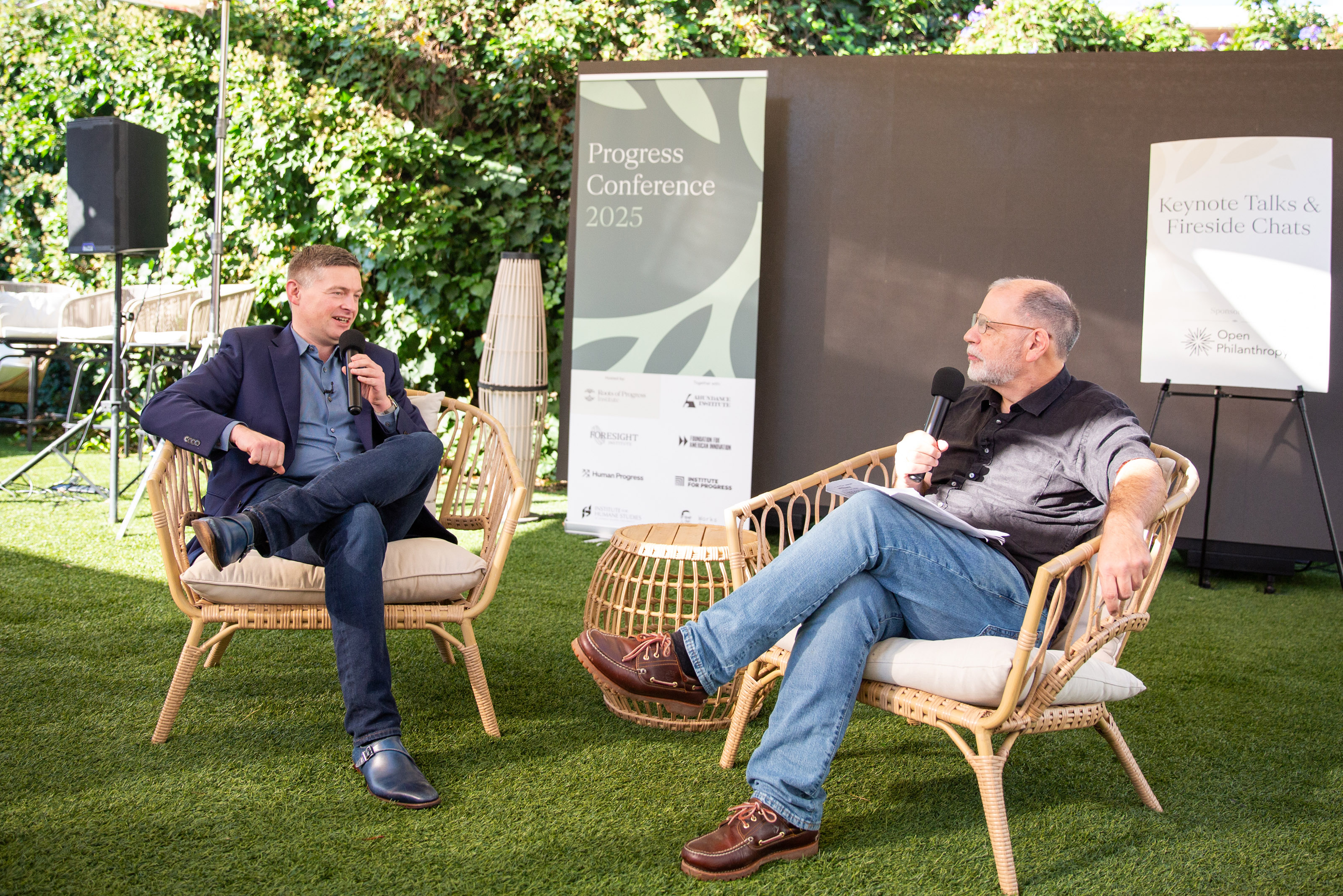
As Scholl wound his way through explanations of the various ins and outs of present-day aviation, he dropped a real gem of a heuristic: “If you see something that seems dumb, the first thing to ask yourself is what would need to be true about the world to make that thing not actually dumb.”
Although a bit tongue-in-cheek, I thought it was a really useful way to interrogate the way things work. That bent of mind — that impulse to look at something that doesn’t make sense and ask “Why?” — comes from a place of deep curiosity. It’s much less “dominating will” and much more “entrepreneurial awareness.”
Someone else who really exemplifies this for me is Laura Foote, executive director of YIMBY Action. In talking about the early days of YIMBYism in San Francisco and the founding of YIMBY Action, she once told me that anyone could have done what she did. And really, what it comes down to is that she was the right person, in the right place, at the right time to see the things that other people weren’t seeing — and to act on the things that other people weren’t ready to believe were possible.
Herein lies what I think is the more powerful version of individual agency. It’s not the superlative genius overcoming all obstacles to lead us into the future — though we should, of course, do our best to keep Harrison Bergeron unshackled — but the person who has cultivated a disposition of restless curiosity that then compels them to take action.
Connecting the threads
Patience and perspective have to enter the picture here. To stick with YIMBYism as an example, we’ve been working on housing reform for about a decade, and people will sometimes question why we haven’t “fixed” the housing crisis yet. Often implicit in that question is an assumption that the movement has prioritized the wrong things. Obviously, I’m inclined to disagree, but the deeper lesson here is that high leverage doesn’t always mean fast.
With regard to U.S. housing policy, we live in a different universe from the one we inhabited 10 years ago, but we’re refactoring institutions that developed over the course of a century, so there’s miles left to go. The same could be said of many issue areas that concern members of the progress community.
While we can never convince everyone of everything, building the things we want to build will require convincing some people of some things. Ancient Greek polymath Archimedes once said, “Give me a lever long enough and a place to stand, and I shall move the world.” As a community, I think we are, in many ways, building levers and looking for places to plant our feet.
The progress community still believes in solving specific problems; we’re just becoming more self-aware about implementation as a meta-problem. We’re moving beyond simply identifying root causes to thinking more deeply about how to intervene in systems that are sometimes inefficient and other times actively hostile. Whatever the case, there’s a growing recognition that a solution is worthless without a mechanism for putting it into the world.
Progress studies as a whole would benefit from a similar meta-conversation focused on theories of change and the practical art of moving ideas from thought experiments to reality. If progress is about problem solving, creating a science of change is just one more problem space to explore on the road to that more prosperous future we all imagine.

The Energy Transition