This article is part of Big Think’s monthly issue The Roots of Resilience.
To live on Mars, humans will need more than rockets and ambition. They will need habitats that can protect them from radiation, brutal temperature swings, and an unbreathable atmosphere. Building such shelters on Earth wouldn’t be a challenge — we could construct an airtight box, pile on radiation shielding, and call it a day. But off-world construction runs into one overwhelming constraint: the upmass problem.
Though reusable rockets are driving down the cost of sending cargo into space, it is still incredibly high. With every extra kilogram of payload adding to mission costs, astronauts are severely limited in what they can bring. “The whole idea of bricks and cinder blocks isn’t going to fly,” says Jim Head, a planetary geologist at Brown University who played an integral role in NASA’s Apollo program.
What could fly, though? Fungi.

A resilient resource
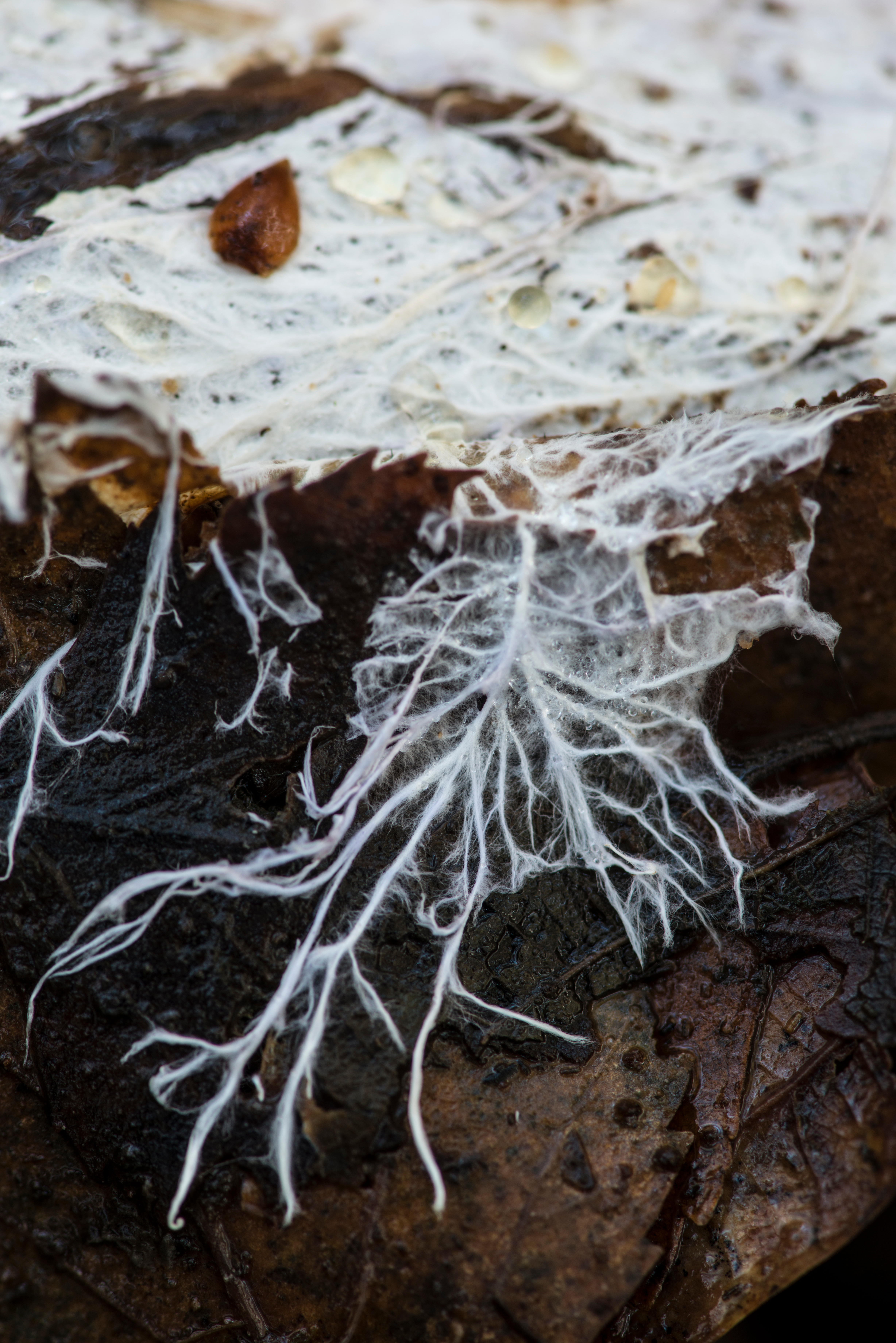
If asked to identify the fungi in a forest, most people would likely point to the mushrooms they see popping out from the soil. But the main part of a fungus is actually its mycelium, a tangled, cobweb-like structure that permeates the forest’s leaf litter and soil. These white threads are cloaked in sheaths of chitin — the same sugar polymer that forms the tough exoskeletons of beetles, crabs, and lobsters — and can be easily grown in flasks and Petri dishes.
Mushroom-forming fungi are master decomposers, capable of breaking down woody fibers that few other organisms can touch — they can then turn that tough, dead material into nutrients that fuel their growth. Mycelium also turns out to be a remarkably useful, sustainable material: As it spreads, it naturally binds together whatever it grows through, forming a tough, lightweight biological scaffold. In recent years, startups like Ecovative and MycoWorks have concocted fungi-based replacements for wood, packing material, and even leather.
Some fungi even show remarkable resistance to radiation. In 1997 and 1998, scientists exploring the ruins of the Chernobyl nuclear disaster discovered black, blue, and brown fungal molds growing on the inner walls and ceilings of contaminated buildings, seemingly indifferent to the gamma radiation in the area. In the contaminated soil just outside, they found fungal filaments growing toward radioactive particles, similar to the way a plant’s leaves will reach toward sunlight.
A few scientists suggested that these dark fungi might actually harness radiation as an energy source — a still-controversial claim — but one thing is clear: They can tolerate intense radiation. The melanin pigments that they produce — distantly related to the melanin that colors human skin — can absorb and mitigate not only UV radiation, but also far more potent gamma rays.
Taken together, these traits make fungi more than a scientific curiosity. For a small group of researchers at NASA, they’ve begun to look like a lifeline for survival beyond Earth.
A biological solution
Synthetic biologist Lynn Rothschild has spent much of her time as a research scientist at NASA Ames looking for ways living creatures could be used to solve problems.
About 10 years ago, while overseeing a college team developing a biodegradable drone, she heard about the company Ecovative, which makes fungi-based packing materials as an alternative to Styrofoam. This got her thinking about whether fungi could be the solution to the off-world shelter problem. She imagined astronauts on Mars growing fungi on discarded packaging, food scraps, and human waste blended with the local reddish dirt. Alternatively, they could feed their fungi with photosynthetic algae that pull carbon dioxide from the thin Martian atmosphere as they grow. The fungi could be used to not only make astronauts’ shelters, but also interior furnishings that feel more natural than the inside of a typical spacecraft. “In principle, we could do the curtains,” she says. “We could do the bedspread. We could do the chairs and the tables and the carpet.”
“My dream is to have this little city grow on the surface of the Moon.”
Lynn Rothschild
Rothschild’s casual interest gathered momentum in 2016, when she attended a NASA conference in Cleveland and met a local architect named Christopher Maurer, who had spent years designing rural schools in the African nations of Malawi and Rwanda. He notes that Americans assume concrete and wood are cheap building materials because many of their true costs are effectively outsourced — the environmental impacts of logging, mining, and cement production are largely borne by people in the developing world.
In Africa, Maurer learned to construct buildings using more sustainable materials, such as rammed earth blocks made of clay-rich soil that is compacted and dried in sunlight. Back in the U.S., he heard about Philip Ross, an artist building brick installations and sculptures out of fungi. Ross had started a company called MycoWorks to manufacture fungi-based interior furnishings. From this, Maurer imagined an elegant approach to making building materials and food at the same time. He attended the NASA conference to propose this strategy for sustaining astronauts on long missions.
During their first conversation at that conference, Maurer recalls Rothschild telling him, “I’ve always wanted to grow a building on Mars. We should work together!” They teamed up with Head, the Apollo mission-planning veteran, and in 2017, the trio secured NASA funding for Mycotecture Off Planet, a project focused on using fungi to create structures on the Moon or Mars.
Mycotecture Off Planet
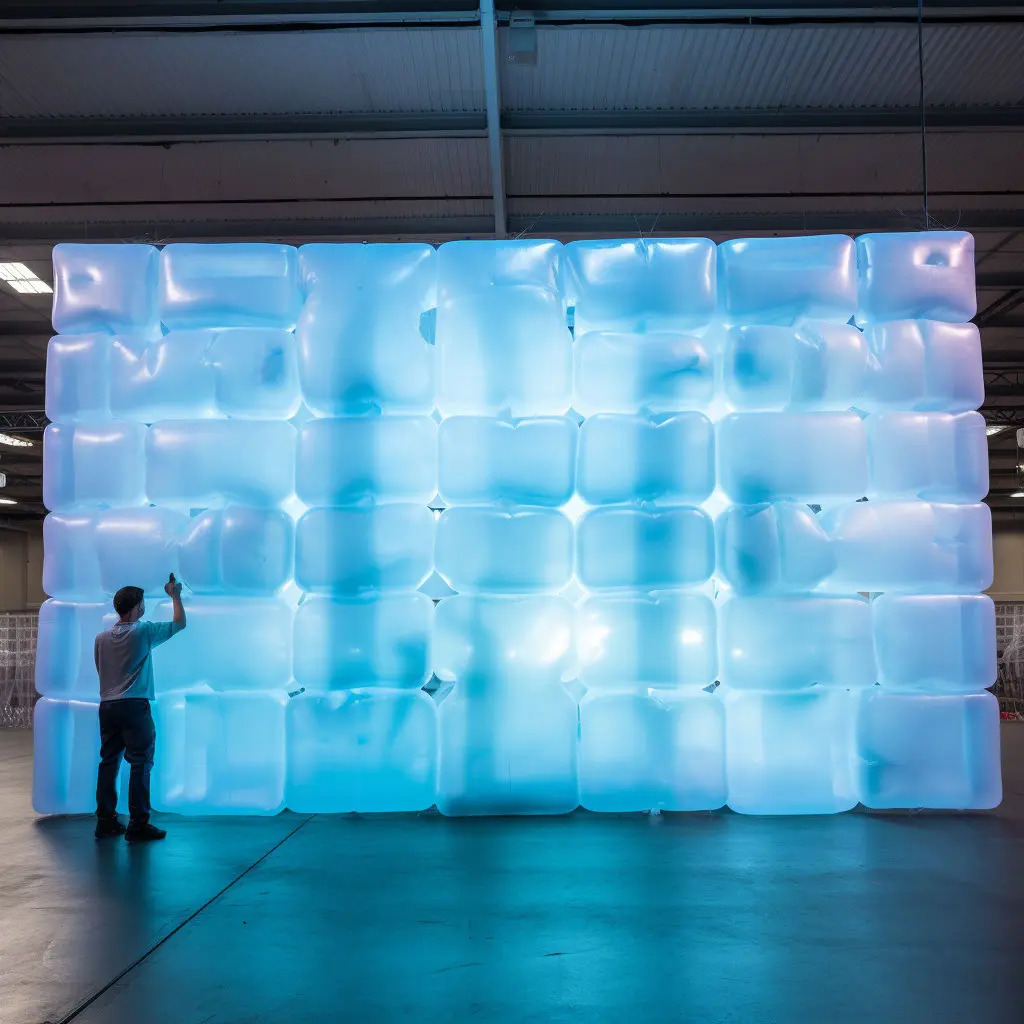
The goal of the Mycotecture Off Planet project is to develop a lightweight fabric structure with an interior divided into compartments, seeded with dehydrated fungal spores and starter nutrients. The structure could then be folded like origami, packed into a rocket, and flown to the Moon or Mars. Once unfolded, water — potentially mixed with local dirt — would be flushed through the compartments. As the fungi grow, they would expand to fill the compartments, inflating the building into a squarish dome in which humans could work and sleep.
On both the Moon and Mars, astronauts could potentially obtain water by harvesting frozen ice reserves found in polar regions or buried beneath the surface. The Moon — unlike Mars — does not have an atmosphere to supply carbon dioxide for growing algae, so the house-inflating fungi might have to be fed sawdust from Earth. But the process could be tweaked to reduce those material needs. Maurer imagines blending the fungi with Martian or lunar dirt; their sticky mycelia would cement it into an extraterrestrial equivalent of particle board. In experiments so far, they’ve done this with fungi and food accounting for 10% or 15% of the material. He estimates that eventually, “Just 1% [of the] material would have to be Earth-derived in that scenario.”
Fungi thrive in harsh environments, tolerate extremes that would destroy most organisms, and can continually grow and repair themselves over time
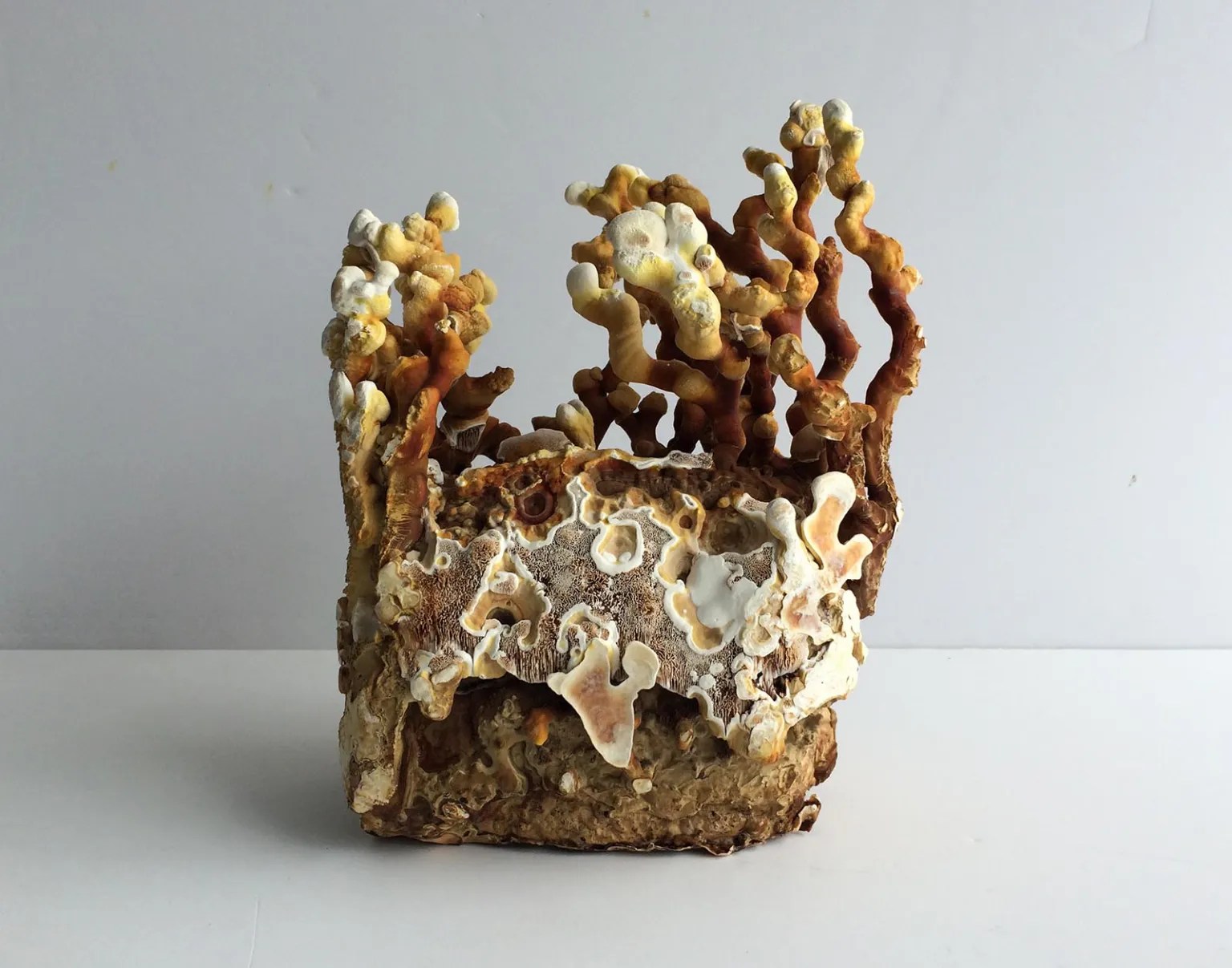
Rothschild has already experimented with growing fungi in her lab, tweaking the conditions to change the mechanical properties of the mycelium threads. She has worked with a handful of species, including Pleurotus ostreatus, which forms pearly-colored oyster mushrooms, and Ganoderma lucidum, which forms shiny red brackets on oak trees across China, Europe, and North America. When the fungi were grown on wood chips or sawdust, the resulting spongy material could be pressed and baked into blocks and sheets resembling concrete, particle board, and plywood.
The mycelium “works as this natural glue” that binds the uneaten fragments of wood material together without the formaldehyde-based adhesives used in conventional particle board and plywood, says Maurer. He and Rothschild showed the importance of this difference during a side project — called MycoHab — that they spun off from their early NASA work. In Namibia, local authorities were producing millions of tons of wood chips while eradicating an invasive bush. Workers grew fungi on 12 tons of this otherwise useless waste, compressing and baking it into 925 blocks that were used to build a house. The three tons of mushrooms that sprouted from the fungi were fully edible, too — something that would be unlikely if the material were cemented with formaldehyde-based adhesives.
Rothschild has already moved on to growing her fungi with synthetic dirts that mimic lunar and Martian mineral compositions. Maikel Rheinstädter, an astrobiologist at McMaster University in Canada, is testing how well these fungi tolerate the high radiation levels and extreme temperature swings they would experience during the lunar day-night cycle. The fungi blocks and sheets that they’ve produced are already good thermal insulators — critical for a human habitat on the Moon or Mars. Given the remarkable radiation tolerance displayed by the molds discovered at Chernobyl, fungi might also provide radiation shielding — Maurer imagines growing thin layers of them inside the inflated buildings to shield the astronauts living within. Another team, led by Radames Cordero and Arturo Casadevall, biologists at the Johns Hopkins Bloomberg School of Public Health, is developing composite materials made with fungal melanin and mycelia, which they have tested as radiation shields on the International Space Station.
From concept to launch
Rothschild and Head see the Mycotecture project as a crucial piece of NASA’s early-stage concepts for an extended crewed mission to the Moon, followed eventually by a mission to Mars. The team hopes to launch a dinner plate-sized prototype of an inflatable mycotecture building to the Moon on a commercial rocket funded by NASA in the next couple of years. “My dream is to have this little city grow on the surface of the Moon, with time-lapse video that could show on the nightly news,” says Rothschild.
Before that can happen, though, she has to get the team’s fungal materials cleared for spaceflight, a lengthy process that includes testing their flammability and the sorts of gases they release as they age. Beyond that, controlling the growth of the fungi could be the biggest challenge, says David Hibbett, a prominent mycologist at Clark University in Massachusetts. He points out that well-funded scientists have struggled for years to coax fungi into doing other useful things, like turning corn stalks or other fibrous cellulose plant parts into ethanol biofuel. “It’s very hard to adapt any organism to do exactly what you want,” says Hibbett.
The work is still early, and significant engineering hurdles remain, but the promise is clear: Fungi thrive in harsh environments, tolerate extremes that would destroy most organisms, and can continually grow and repair themselves over time. If that resilience can be harnessed for off-world construction, it could reduce the need to haul massive quantities of building material across space — bringing the dream of long-term habitats on the Moon or Mars closer to reality.
This article is part of Big Think’s monthly issue The Roots of Resilience.

The Energy Transition