




















Search
Bioengineering

By treating the human body as an information system, scientists are using AI to simulate cells, visualize hidden biology, and detect disease at its earliest — and most preventable — stages.
Biohub

New biotech tools could clean up everything from construction to agriculture.

From global DNA screening standards to safeguards for benchtop synthesizers and AI tools, a new biosecurity playbook is taking shape.

The “dystopian” biotech imagined in these novels is now changing real lives for the better.

55mins
“Old systems of the past are collapsing, and new systems of the future are still to be born. I call this moment the great progression.”

15mins
"We're living in an extraordinary moment in history. We are at a moment here in 2025 where we have world historic game-changing technologies now starting to scale."

One of the most original and optimistic thinkers in America sketches some big ideas about what's possible with AI in the next 25 years.

The latest from Peter Leyden's "The Great Progression: 2025 to 2050", an essay series published by Freethink.
Tech expert Peter Leyden argues that we have a historic opportunity to harness AI and other transformative technologies in order to make a much better world over the next 25 years.
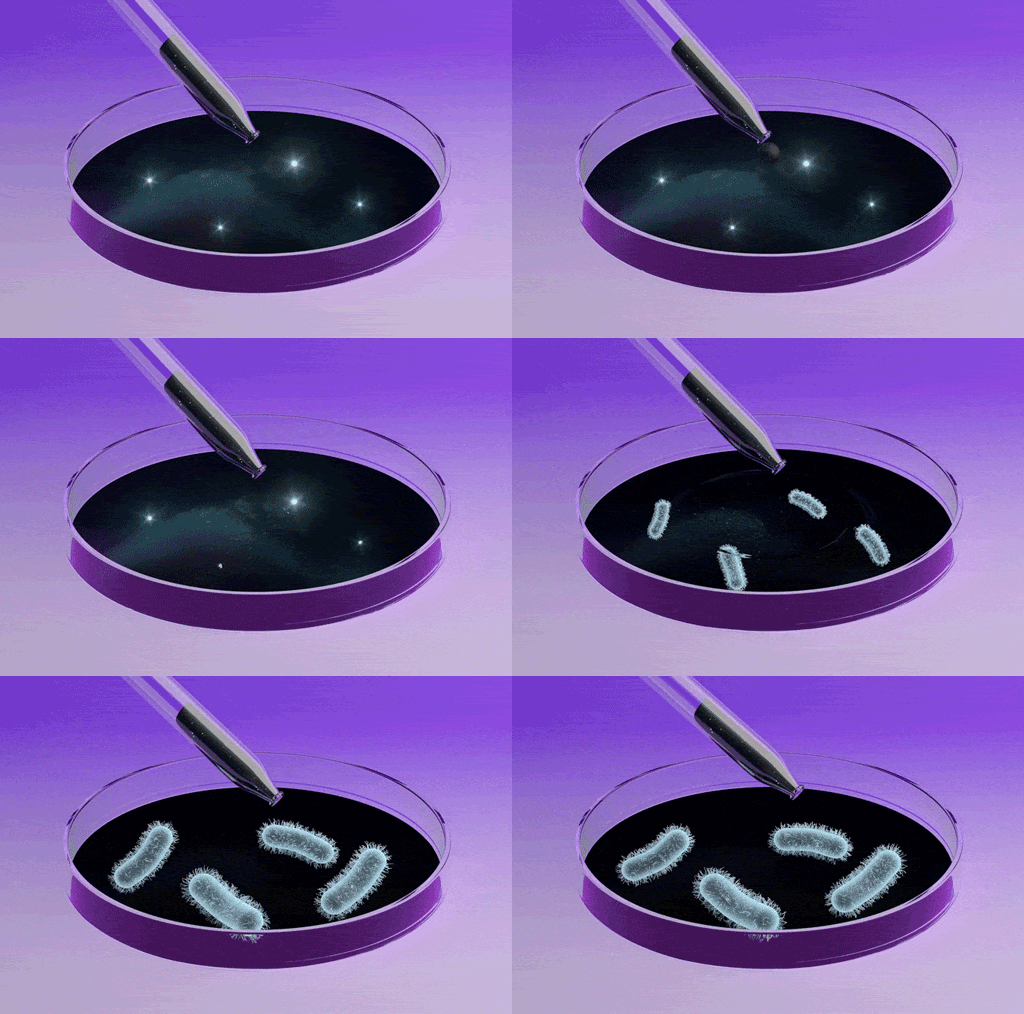
“I want to change the way we think about the past altogether,” says Dr. Betül Kaçar, an astrobiologist who studies the origin of life.

There is one obstacle that reliably blocks innovative ideas: how we fund science.

The preservation and celebration of life, and not greed, should be our primary decision-making value.

What the breakthrough methods of laboratory research can teach the business world about brainstorming.

They call it “Judo T-cell therapy,” and it’s 100 times more potent than regular CAR-T cells.

4mins
What if AI could tell us we have cancer before we show a single symptom? Steve Quake, head of science at the Chan Zuckerberg Initiative, explains how AI can revolutionize science.
Chan Zuckerberg Initiative

It could perform a speech recognition task with 78% accuracy.

The bots started as windpipe cells, yet they helped nerve cells repair and grow.

It’s not just fun: DNA origami has the potential to revolutionize engineering at the nanoscopic scale.

It could prevent sun damage and help chemical burns heal faster.

You can’t farm spiders — but putting spider genes into silkworms works even better.

The technology could yield "made-to-order resistance genes" to protect crops against pathogens and pests.

Someday, scientists could use stem cells to guide the development of synthetic organs for patients awaiting transplants.

Lab-grown meat may work better as a complement to animal agriculture rather than a replacement of it.

The intensely white coloration of the shrimp is a remarkable feat of bioengineering.

Brain-computer interfaces could enable people with locked-in syndrome and other conditions to "speak."

A recent study is the first to fabricate electronic components from endogenous molecules.

The soft robotic models are patient-specific and could help clinicians zero in on the best implant for an individual.

The body uses its own electricity to repair wounds. Faster healing may be possible with additional electrical stimulation.

Using shaped ultrasound, researchers can 3D print objects in one shot.

Disease kills off 40% of farmed catfish. This gene protects them.