




















Search
Philosophy
2mins
From science to philosophy, three perspectives explore why humans can’t stop asking “why.” Our search for purpose, they suggest, is less about finding answers and more about learning how to move forward.
Unlikely Collaborators

Leaders in China hope that AI and robotics can finally resolve the flaws of a centralized planned economy. But US technoculture has an edge.

In this excerpt from The Breath of the Gods, Simon Winchester explores how the Sumerians first named the wind and shaped our early understanding of the natural world.

Weird-looking galaxies, with tentacle-like tails or prominent dual streams, appear like jellyfish or bunny ears. But that’s just the start.

When a word comes to mean everything, it means nothing.

In a world of fast answers, leadership shaped by suffering is radical — and transformative.

Digital tools are pulling us away from fixed texts and back toward fluid, interactive communication.

13mins
“People got skeptical, fearful, doubtful of the very idea of progress in the 20th century and we allowed that to slow down progress itself.”

"Our ultimate goal, after all, is not a good death but a good life to the very end."

In this excerpt from "The First Eight," Congressman Jim Clyburn shares the story of Robert Smalls, the man whose audience with Lincoln may have saved the Union army.

Welcome to The Nightcrawler — a weekly newsletter from Eric Markowitz covering tech, innovation, and long-term thinking.

In 2017, a kilonova sent light and gravitational waves across the Universe. Here on Earth, there was a 1.7 second signal arrival delay. Why?

Ryan Holiday on why wisdom depends on failure, experimentation, and the courage to admit when we’re wrong.

NASA’s Caleb Scharf talks with Big Think about life’s long experiment in expansion.

3mins
The brain is an “illusion factory.” Here’s what that means for our perception of time.
Unlikely Collaborators

13mins
“Chance invents and natural selection propagates that chance invention.”

Former tech founder Scott Britton wants to shatter the binary myth that separates driving ambition from inner development.
12mins
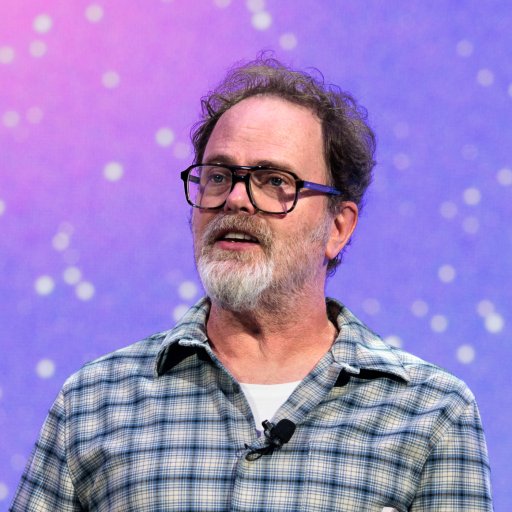
The hospital where Rainn Wilson’s wife and son nearly died became his own personal holy site. There, he discovered that the sacred can exist in places we least expect it.
During his talk at A Night of Awe and Wonder, he explained how the awe we feel in moments of courage and love is moral beauty — and following it might be the start of our spiritual revolution.

Do aliens speak the same physics that we do, with similar laws, observables, and underlying mathematics. Maybe not, argues Daniel Whiteson.

1hr 12mins
“Consciousness is fundamental. It's a fundamental property of the world that we inhabit, a fundamental property of the universe.”

16mins
“The messy reality of it is that all of these very smart people, including Isaac Newton, were talking to other people.”

The great books aren’t just classics — they’re cultural Schelling points that give our minds a place to meet up in the world of ideas.

Welcome to The Nightcrawler — a weekly newsletter from Eric Markowitz covering tech, innovation, and long-term thinking.


Metacognition — the ability to think about your thinking — can help you learn faster and make better decisions.

10mins
“When you start to accept that you have profound influence on the world, but very limited control, you start to see the world differently.”

Panpsychist philosopher Philip Goff, PhD on mysticism and the future of faith.
John Templeton Foundation

2mins
“In most instances, ‘good enough’ is good enough.” A time management expert, a cognitive scientist, and a psychologist share their takes on productivity, perfectionism, and the harm of hustle culture.
Unlikely Collaborators

Times dilate and lengths contract near the speed of light. Bizarre and confusing? Sure. But under relativity, it can't be any other way.

In this excerpt from "The Shortest History of AI," Toby Walsh explores the history of the Logic Theorist, the first AI to prove mathematical theorems.