This content is locked. Please login or become a member.
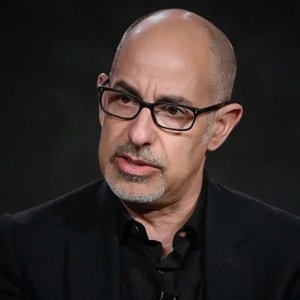




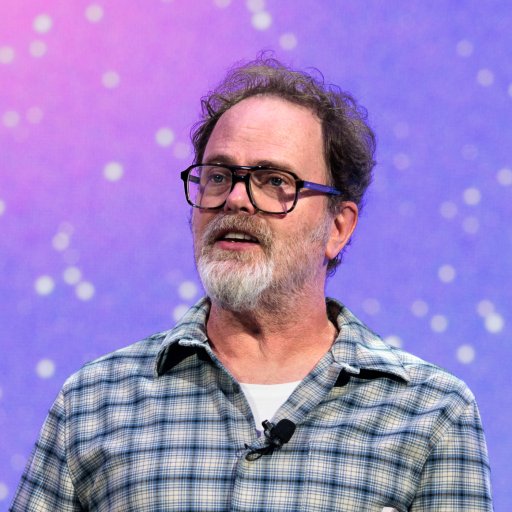



Filmmaker David S. Goyer—the screenwriter behind The Dark Knight, Blade, and Foundation—shares the strange and awe-filled moments that shaped his life, from growing up at the “edge of the ordinary” to uncanny experiences in Israel and Tibet that were too powerful to ignore.
Speaking at A Night of Awe and Wonder, hosted by Big Think and the John Templeton Foundation, he explains how these encounters became the foundation of his storytelling. Goyer shows how awe helps us pay attention, stay open, and see meaning in moments we might otherwise overlook.
DAVID S. GOYER: I wanted to say three extemporaneous things before I launch it in my prepared comments. The first was I wanted to thank Freethink and the Templeton Foundation. What an amazing night. I mean, I'm, I'm just like so impressed and moved and, you know, the last act, I just, I sort of wish I was on mushrooms now, and when they asked me to do this, I thought, yeah, sure. I love science. I'm a big science geek. I'm kind of science adjacent. I work predominantly in science fiction and I thought it would be like a q and a or something like that. I didn't know I'd, I'd be doing a Ted talk and so I'm having a lot of kind of imposter syndrome right now and so sort of fuck you guys for asking me to do this. But I'll, I'll try to muddle through. Yes.
My name is David S. Goyer. I'm a filmmaker, I'm a storyteller. You heard some of my credits. I've also worked on the Blade franchise, Terminator, Apple's Foundation, the Murder Bot show, also on Apple Sandman, which was on Netflix. So you're probably asking yourself, and as am I, why the Templeton Foundation, Freethink Media would ask a storyteller to talk about awe.
I guess a storyteller is someone who crafts and shares narratives that illuminate the human experience, that invites listeners to see themselves in the stories that we tell and storytellers, hopefully when we're doing it right, create these bridges of empathy, connect people across backgrounds, because I think film and TV novels, they can be this sort of universal shared experience revealing like our hopes and our str struggles and our dreams.
So as it turns out, I mean, awe is one of the storyteller's most powerful tools. Onscreen awe can help initiate the hero's journey. It can force characters to confront their own mortality and by extension the audiences. But offscreen awe is also equally important for storytellers. In fact, I would, I would, I would wager that it's like the most important thing that storytellers can engage in. So I, I guess I'd like to illustrate that using some of my own experiences, this will be kind of my origin story, what made me become a filmmaker.
So throughout my life I experienced a series of like sort of odd moments filled with wonder and awe that they've, I guess they've quietly shaped my path and inspired me to become an artist. These moments, they were each kind of profound in their own way and they've woven together to form a thematic narrative, or I wove them together to form a fanatic narrative that sort of guided my creative journey.
I grew up in Ann Arbor, Michigan. So I grew up in a modest neighborhood where the suburbs kind of faded it into wilderness at the edge of my street. It was a dirt road and I like to refer to it as the edge of the ordinary. As children, my brother and I would often escape into the wilderness whenever we had a chance, we would explore the woods for monsters, Bigfoot for sure, giant snapping turtles, various cryptics. We were very into decrypted. My mother had a rule, if we caught anything, we could bring it back to the house and keep it in our basement for a day. So then we had to set it free. So single mom, we caught snakes, salamanders, neut, frogs, mice, rabbits, snapping turtles. One time we caught a skunk and it sprayed us and my mother and my brother and I would come home when it was dark. Only when we heard my mother whistling Yankee doodle dandy, which her father, my grandfather Ted, uses a means to guide her home.
So that boundary between the known and the unknown became this sort of metaphor for my life and my art. And I learned that the world is full of all of these hidden places and stories waiting to be discovered. My family life was turbulent. My father was brilliant, but he was troubled. He was schizophrenic, he was had been physically abused by his parents, sexually abused by his parents. It was, he was kind of a mess. He left our home for good when I was eight and he also had struggles with addiction and mental health obviously, and it casts a long shadow over him and us.
But he also introduced me to the worlds of Tolkien and Asimov and Clark and Ursula Le Guin and Edgar Rice boroughs. And so that was like the one good memory that I have of him was him reading to me all of these escapist, fantasy and science fiction stories. And so it was an early refuge for him and it became an early refuge and a source of wonder for me, teaching me that stories can be sort of portals into other realities.
So I remember this one incident in particular when I was six. My father had taken this massive dose of LSD and he was bedridden for like a week and he was shouting from the bedroom that he could see the fabric of the universe. And he said one day that he was, had been reborn as a panther, that he was a black panther. And then the next day he said he'd been reborn as a dragon and he demanded that I run to the local grocery store and give him a bunch of notes books. So, so they could document this kind of foun of wisdom. And he, he ended up filling up like 12 of, I don't know what it was, probably LSD inspired nonsense. Eventually he left and I remember the night he left running downstairs where I knew the notebooks were to sort of, so I could sort of flip through them and see, you know, what pearls of wisdom he'd written in there. But my mom had already grabbed them the night he left and she burned them in her backyard. And so there probably wasn't any wisdom in there, it was probably gibberish. But I, I like to think that there was,
So my aforementioned grandfather, Ted, he died when I was relatively young, but he was remembered as this sort of man of warmth and humor. He told jokes, he did magic tricks. He used to tie handkerchiefs into the shapes of animals and sort of animate them. And while grandpa Ted was alive, he was sort of this bulwark against my father and all the craziness that had subsumed our lives. And after he passed away, we became more vulnerable to my sort of father's rages. Yet eventually, even in my grandfather's absence, I always felt that his spirit lingered and was sort of looking over us in these inexplicable moments of comfort and magic.
So in 1973, fleeing my father's threats, he'd threatened to kill my mother and my brother and I, my mother pulled us out of school and whisked us away to Israel. We'd never been outside of the state, much less outside of the country. We didn't have any money and we had to get creative when it came to sightseeing. And somehow my mother, I have no idea how she did this, she enrolled us in this program that was reserved for military families for sort of off-duty IDF officers. And so we found ourselves on this bus with IDF officers and soldiers and we would sleep in barracks at the night and eat in the mess halls. And then we'd see these cultural spots around Israel.
So it was just a bunch of soldiers. And then my mom and my brother and I, so one night my brother and I, we snuck out and there was, we were on the border of Lebanon and we thought it'd be cool to sneak into Lebanon. We crawled through a gap in the barbed wire fencing. I was in third or fourth grade, he was a year younger than me. We shimmied across no man's land. We squirmed through another barbed wire barrier into Lebanon. We thought, okay, cool. And then we turned around and we saw all these signs also in English that said, we just traversed this act minefield. And then we were shitting our pants. So we were trying to figure out what the fuck did we do? Did we tell the Lebanese that were here? Like what did we do?
So we heard someone, and this is true whistling Yankee doodle dandy. So we assumed it was my mother that she'd found out that we'd snuck out. But it turned out it was this elderly man an American. He waved us back and he said, if you come back, like I'll, I'll, I'll give you show you magic trick. So we started back across and he was kind of guiding us and every once in a while he would tell us to shimmy left or shimmy right? He was very calm as he spoke, but we were acutely aware of the danger that we were in. And my brother started crying and he might've wet his pants retroactively. I like to think so that he was the one that wet his pants and said of me, but I dunno, it might've been me.
So once we got safely back across the border, this mystery man made good on his promise. He took out his handkerchief and he tied it into the shape of a mouse. The very same table trick that my grandfather Ted used to do for us. Then the soldiers showed up and there was a bot, a lot of kerfuffle. And you know, in the kerfuffle the guy disappeared and the IDF were up in arms. Understandably, they were concerned that this mysterious stranger might be roaming the base. The soldiers searched everywhere, they never found him. And my mother scolded, my brother and I, they didn't believe that this guy existed, but we knew what we'd seen and we felt that it was my grandfather's spirit that had guided us back across the, the minefield.
So about a decade later, as a teenager, I was riding my 10 speed twin varsity bike up here on Parkway, which is this very steep grade in Ann Arbor. The going was really slow and it was dusk. And I noticed something that was sort of keeping pace alongside me, just outside of the tree line. I thought it was like a dog. Every once in a while in Michigan you might get a black bear, maybe it was a black bear. And I kept looking over and it wasn't, it was a black panther. And I'm not shitting you in Michigan.
So for about five minutes, this thing, it was maybe 30 feet away from me, the impossible walked beside me. And when I got home I said, mom, you're not gonna believe what I've seen. She totally dismissed it as another one of these tall tales. But then the next day in the Ann Ann Arbor news, there was this story about all these sightings of a black panther, the Manchester Panther was, which was this neighboring town. It went on to become a local legend, dozens of other sightings, spread it up in the coming months. There were all these attendant blurry like Sasquatch photos of it. And that panther became like my very own cryptic. I was like, holy shit.
So now when it comes to spirit animals, if you look up in the books, the Black panther often represents mystery and the ability to navigate the unknown with confidence. And I already told you, my father claimed to have been a Black Panther reborn, which is weird. So that encounter with the inexplicable reinforced my sense that the world was like stranger and more full of possibility. And at that time I was like a junior or senior in high school. I was planning on a sensible career. My grandmother wanted me to become a doctor or a lawyer or a dentist. And I decided I would opt for a police detective, which I reason like the most exciting of the sensible options. I wanted to become a homicide detective. But then I thought about the panther and what I'd seen. And on a whim I applied to film school instead.
And my family was aghast. They thought I was throwing my my life away and I might might as well have said I wanted to be like a bullfighter or something like that growing up in Ann Arbor, Michigan. But I held onto the panther and I told my mother I wanted to turn all those tall tales into a calling and eventually my mother caved. So I got to film school, I studied my ass off, I graduated with the highest GPA in the program. I ended up selling my first screenplay at 21 to Jean Claude Van Dam. The guy made my career the muscles from Brussels, but I owe him.
And I had this mentor, Nelson Gidding, who had written a lot of movies for Robert Wise, a very esteemed director. And Nelson told me that my early success was dumb luck and that my career would be doomed a crater if I didn't get some living under my belt. And he told me to take the earnings that I'd made from this Jean-Claude Vanda movie and travel the world and get really far beyond my comfort zone. And so I did. So over the next four or five years, I, I think I traveled to about 50 or 60 different countries.
And in 2000 I spent about six weeks trekking in Tibet, which was hard to get into at that time. It was an amazing trip, but a very uncomfortable trip. There were dust storms, you would blow your nose and just this awful colored dust would come out of your nostrils, you'd hawk it up for six weeks. All we ate was yak, barley cakes, potatoes, beer, and water. We were constantly harassed by the Chinese army, but it was, it was uncomfortable.
But I also witnessed these incredible, a inspiring experiences that no one back in LA or my regular home, I think could have possibly imagined. So I witnessed a sky burial at drinking till monastery where they wrap the deceased, they chop the body up and they wrap the deceased in cloth, and then they allow the vultures to consume them. And so for a whole day I watch these vultures ate like six to eight bodies. And then I spent a night with a hermit in a cave at Naso. And he'd taken this 10 year of hour of silence. And then I attended the Sga Dawa Festival at SPU Monastery where they sort of celebrate the birth in the enlightenment of Buddha.
And I remember it was snowing that morning and then the sun broke through a snowstorm and there were thousands. It was like Woodstock. There were thousands of these pilgrims that had, and as I, I became the center of attention because I was shedding my layers because it wasn't cold anymore. I was wearing a T-shirt and it exposing my arms. And the pilgrims had rarely, we were way out, far away from Lasa, the pilgrims, they'd rarely glimpsed westerners before, and they never glimpsed anyone back in 2000 that was fully sleeved. And they kept calling me a drug boo, which means the son of a dragon.
And these pilgrims were pressing their babies into my arms, asking me to bless them, asking me to cure them. And I thought, holy shit. I'm like, I'm like in the man who would be king. That movie with John Houston. And by now I was distracting from the ceremonies and the local monk, monks were understandably pissed. And, but then I had an ASCE up my sleeve and I, I'd smuggled in a bunch of laminated images of the Dalai Lama beneath the insoles of my hiking boots. And the images were illegal in Tibet.
And so when they saw that I had these sort of trading card sized images of the Dalai Lama that were laminated, I had about 20 of them in my boots, the monks embraced me and declared that I was indeed a drug boo, a son of a dragon. And so here, obviously I need to remind you of the other animal. My father had claimed to have been reborn animals, a dragon. So I, I felt in that moment that my life had come full circle. And after about four years of wandering the globe, I decided, okay, maybe it was time to come home. And then I decided to up my game and become a director as well as a screenwriter. And so I did.
So I guess my point is, these moments of awe, they, they profoundly shifted my sense of self. They taught me humility in the face of the sacred and responsibility in the presence of wonder. Awe invites us to listen, to observe, to honor the stories that surround us. And humility in turn shapes how we engage with others in the world, making us more open and more compassionate.
And in a strange way, all these experiences fed their way back into my work. I mean, I don't know if you any of you have seen Batman Begins, but that movie begins with Bruce Wayne in Bhutan. It was originally Tibet. It was based on my experiences in Tibet. But of course, China didn't want us, they wouldn't release the movie if it was Tibet. So we changed it to Bhutan. And so in all these strange ways, like these experiences that Nelson had told me to go out into the world and have an experience, they did enrich my craft and my career.
And so I guess what unites these moments, because I'm a storyteller and I have to unite sort of these disparate elements, is a shared sense of crossing thresholds between safety and danger, the mundane and the miraculous. And in the end, it's the spiritual charge of these experiences, the sense of being both lost and found in the presence of the extraordinary that's shaped my art and my way of being in the world. And if I could extend, I guess, a call to action to any of you, it would be this, seek out mysteries, look for signs, to shake things up, look for connections in the most unlikely places.
So I remember when I first got to Tibet, I don't know, we were sort of acclimatizing ourself to the altitude the food was. I mean, once you've yak for six weeks in a row, it's pretty bad. I was feeling really homesick. And I remember feeling profoundly out of place when I first entered that hermits cave at Naso. I felt like I was trespassing, that I didn't belong here, but I was spending the night there. And as the minutes and the hours tick by, I slowly started to relax. He didn't speak English, obviously. I didn't speak Tibetan. And we communicated via pantomime. We drank yak butter tea, which is horrible. And you know, at every time he would turn his head, I would toss it out and then he would refill my cup.
But we smiled across the fires, we warmed our hands. And at night after my host had fallen asleep, he started snoring. And it was like this deep CPAP apnea, snore. And I started laughing, thinking that I'd like traveled to the roof of the world, just had this totally mundane experience. And in that moment I felt at home.
So thank you very much.