




















Search
Evolutionary Biology

Cognitive flexibility, opportunistic survival, and social cooperation have allowed rats to thrive in conditions that wipe out other species.

Once land plants, seagrasses staged one of evolution’s boldest reversals — returning to the ocean and reinventing their biology to thrive beneath the waves.

23mins
Brian Cox examines why, despite billions of stars and trillions of planets, we have found no evidence of other intelligent life.

Science fiction romanticized Mars as a place of adventure and future settlement; science tells a very different story.

A big open question in 21st-century science is how life began here on Earth. The metabolism-first scenario just might be the best one.

The “dystopian” biotech imagined in these novels is now changing real lives for the better.

Speculative evolution explores the strange paths natural selection might have taken — and what that means for humans.

Some sci-fi aliens are wildly implausible. Others aren’t so far-fetched.

One big goal of science is to find an inhabited, Earth-like planet. But if we find an Earth-like world, will we even recognize it?

Just like animals, galaxies often have bizarre, unusual, or even unique properties. But finding many, all at once, really does raise alarms.

1hr 51mins
Stoicism has been flattened into slogans about toughness, detachment, and emotional silence, a version that’s easy to sell, but mostly wrong. Massimo Pigliucci returns Stoicism to its original purpose: a […]


54mins
“How can all the diversity and, sort of, seeming order that's out there in the world emerge from a process dependent upon chance?”

Well before plants and animals, there were fungi.

As we crank up our search for more powerful AI, maybe we should slow down and reimagine the shape and language of intelligence itself.
12mins
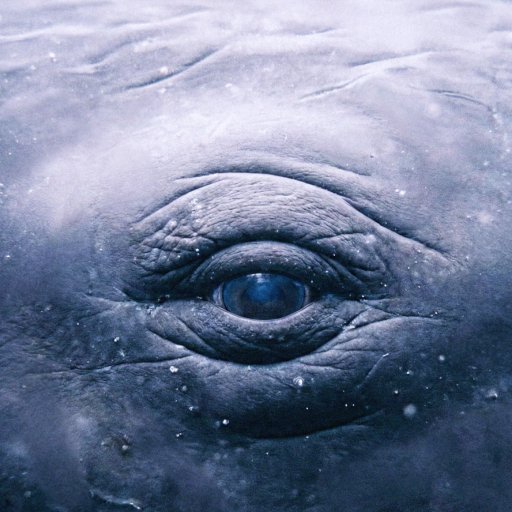
Ninety million years after our lineages split, humans are beginning to listen to whales in a new way. Marine biologist David Gruber shares the work that has become his life’s pursuit: learning how to hear the planet’s largest mammals.

NASA’s Caleb Scharf talks with Big Think about life’s long experiment in expansion.

13mins
“Chance invents and natural selection propagates that chance invention.”

Welcome to The Nightcrawler — a weekly newsletter from Eric Markowitz covering tech, innovation, and long-term thinking.

Maybe — just don't expect a carbon copy.

In this excerpt from "Playful," Cas Holman surveys the research that brought the neuroscience of play into the mainstream.

Members
Game theory, originating in economics, is the science of strategic thinking applicable to various fields, including biology and diplomacy, and is crucial for decision-making in all aspects of business, according to game theorist Kevin Zollman.

Questions about our origins, biologically, chemically, and cosmically, are the most profound ones we can ask. Here are today's best answers.

The fear of unleashing forces beyond control has haunted science for centuries.
3mins
Biologist Tyler Volk PhD, psychiatrist Bruce Greyson MD, and palliative care physician BJ Miller MD, reveal how confronting mortality can improve the way we live.
Unlikely Collaborators

1hr 13mins
“Nothing about human behavior makes sense except in the light of culture and in anthropology, and we need to understand the cultural component to our behaviors as well.”

Welcome to The Nightcrawler — a weekly newsletter from Eric Markowitz covering tech, innovation, and long-term thinking.

7mins
“The idea of evolution by natural selection is, for me, probably the most beautiful idea in biology.”

Science helps us imagine the vastness of space and time — and our small but meaningful place within it.

Philosophers once prophesied that evolution would lead to minds far greater — and stranger — than our own.