
















Evolutionary Biology

Evolutionary Biology

Three illustrated rats in different colors stand upright together, surrounded by sketches and diagrams of rats, fencing patterns, and hints of rat survival strategies in the background.
Cognitive flexibility, opportunistic survival, and social cooperation have allowed rats to thrive in conditions that wipe out other species.
The book cover of "How Flowers Made Our World" by David George Haskell features a large pink orchid, lush nature scenery, and hints at the evolutionary history of flowers, with text in white and yellow on a dark background.
Once land plants, seagrasses staged one of evolution’s boldest reversals — returning to the ocean and reinventing their biology to thrive beneath the waves.
A man with short dark hair, wearing a dark t-shirt and smartwatch, gestures with his hands while standing in front of a plain white background.
23mins
Brian Cox examines why, despite billions of stars and trillions of planets, we have found no evidence of other intelligent life.

A solid orange rectangle fills the entire image without any patterns, text, or distinguishing features.
Science fiction romanticized Mars as a place of adventure and future settlement; science tells a very different story.
Illustration of ape to human evolution with skeletal figures, labeled amino acids, and colorful dots representing molecular structures, highlighting metabolism and the origin of life on Earth.
A big open question in 21st-century science is how life began here on Earth. The metabolism-first scenario just might be the best one.
A gloved hand arranges five test tubes labeled with book titles and authors in a white rack against a light background.
The “dystopian” biotech imagined in these novels is now changing real lives for the better.
Illustration of various animal and human silhouettes in colored circles connected by arrows, set against a textured abstract background, evoking themes of speculative evolution.
Speculative evolution explores the strange paths natural selection might have taken — and what that means for humans.
A collage of scientific and space-themed images, featuring an insect, a planet, a human face, a robot, dandelion, star charts, and hints of aliens—all in varied colors and textures.
Some sci-fi aliens are wildly implausible. Others aren’t so far-fetched.
From the vastness of space, Earth at night reveals its exo-earth beauty, with illuminated continents showcasing a tapestry of lights across North and South America. Major cities and regions emerge from the glowing darkness, painting a vivid picture against the backdrop of oceans.
One big goal of science is to find an inhabited, Earth-like planet. But if we find an Earth-like world, will we even recognize it?
A deep space image showing a field of distant galaxies with several regions zoomed in to highlight faint, small JWST objects.
Just like animals, galaxies often have bizarre, unusual, or even unique properties. But finding many, all at once, really does raise alarms.
A man sitting in a chair.
1hr 51mins
Stoicism has been flattened into slogans about toughness, detachment, and emotional silence, a version that’s easy to sell, but mostly wrong.  Massimo Pigliucci returns Stoicism to its original purpose: a […]
Illustration of a person holding a cup while selecting a book from a shelf filled with various colorful book spines.
Revisiting the year’s noteworthy nonfiction.
An older man with a white beard sits on a chair against a white backdrop, with a large, colorful DNA double helix illustration in the background.
54mins
“How can all the diversity and, sort of, seeming order that's out there in the world emerge from a process dependent upon chance?”
Top-down view of assorted wild mushrooms arranged in a circle with beige and orange cutout shapes on a black background.
Well before plants and animals, there were fungi.
A petri dish containing smart slime mold with branching vein-like structures, viewed from above against a black background.
As we crank up our search for more powerful AI, maybe we should slow down and reimagine the shape and language of intelligence itself.
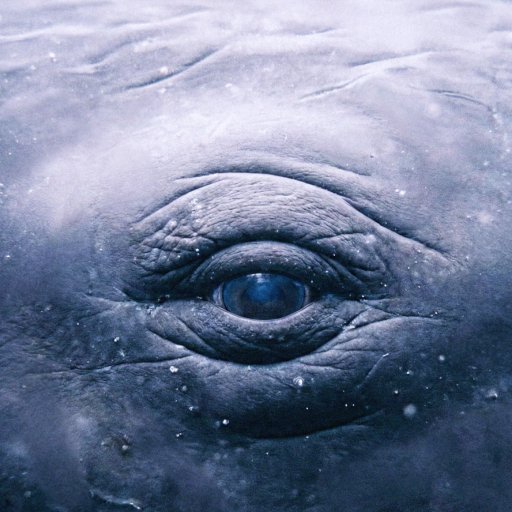
Close-up of a whale's eye underwater, showing textured skin and small white spots.
12mins
Ninety million years after our lineages split, humans are beginning to listen to whales in a new way. Marine biologist David Gruber shares the work that has become his life’s pursuit: learning how to hear the planet’s largest mammals.
A cylindrical space habitat with green landscapes and rivers, viewed from inside; two moons and a bright sun-like object are visible through large windowed sections.
NASA’s Caleb Scharf talks with Big Think about life’s long experiment in expansion.
A petri dish with a red agar medium shows various colonies of bacteria growing, with dense streaks on the right and scattered colonies on the left.
13mins
“Chance invents and natural selection propagates that chance invention.”
A grayscale portrait of a smiling man is overlaid on classical artwork with pink and black graphic elements, evoking a sense of desire. The text at the top reads "THE NIGHT CRAWLER.
Welcome to The Nightcrawler — a weekly newsletter from Eric Markowitz covering tech, innovation, and long-term thinking.
Book cover of "Playful" by Cas Holman with Lydia Denworth, featuring colorful letters and googly eyes on the "u" and "l." Subtitles discuss creativity, connection, play, and insights from play research.
In this excerpt from "Playful," Cas Holman surveys the research that brought the neuroscience of play into the mainstream.
A silhouette of a person stands on a red tile among multicolored geometric cubes in an abstract pattern.
Members
Game theory, originating in economics, is the science of strategic thinking applicable to various fields, including biology and diplomacy, and is crucial for decision-making in all aspects of business, according to game theorist Kevin Zollman.
ESO milky way
Questions about our origins, biologically, chemically, and cosmically, are the most profound ones we can ask. Here are today's best answers.
Two hands, one light and one dark, each holding a contrastingly colored molecular structure against a gradient background.
The fear of unleashing forces beyond control has haunted science for centuries.
Close-up split image showing the left half of a human eye and the right half of a purple flower, highlighting the detail and texture of both subjects.
3mins
Biologist Tyler Volk PhD, psychiatrist Bruce Greyson MD, and palliative care physician BJ Miller MD, reveal how confronting mortality can improve the way we live.
Unlikely Collaborators
A man sits on a chair in a photo studio, flanked by black-and-white illustrations of an early human ancestor on the left and a modern man running on the right.
1hr 13mins
“Nothing about human behavior makes sense except in the light of culture and in anthropology, and we need to understand the cultural component to our behaviors as well.”
Collage featuring "THE NIGHTCRAWLER" text, a black-and-white photo of a person, tree roots reminiscent of smart forests, and code fragments, all overlaid on a gray grid background.
Welcome to The Nightcrawler — a weekly newsletter from Eric Markowitz covering tech, innovation, and long-term thinking.
Two red-toned, woodcut-style portraits side by side: one of a gorilla and one of an older man with a beard, on a beige background.
7mins
“The idea of evolution by natural selection is, for me, probably the most beautiful idea in biology.”
Diagram showing a galaxy, zooming in to highlight a small area labeled "Human Experience" within a grid mapping time and space on logarithmic scales.
Science helps us imagine the vastness of space and time — and our small but meaningful place within it.
Three circles show, from left to right, an oyster shell, a Vitruvian-style human figure, and a swirling spiral, linked together on a textured lavender background.
Philosophers once prophesied that evolution would lead to minds far greater — and stranger — than our own.